- Author: Raymond
- Category: Microhealth Insurance in Kenya
Why We Recommend Microhealth Insurance for Both Urban and Rural Families in Kenya
Medical bills do not choose whether you live in Nairobi, Kisumu, Eldoret, Mombasa, Nakuru, Garissa, Kitale, Nyeri, Kisii, Kakamega, Machakos, Meru, Kericho, or a small rural village.
Sickness does not ask whether you are employed, self-employed, farming, running a shop, driving a boda boda, working in mjengo, teaching, selling online, or raising children at home.
When a child falls sick, when a parent needs admission, when an emergency happens at night, the question becomes very real:
“Do we have money for hospital?”
That is why microhealth insurance makes sense for both urban and rural families. It gives ordinary households a practical way to prepare for medical bills without waiting for emergencies to push them into fundraising, loans, or selling assets.
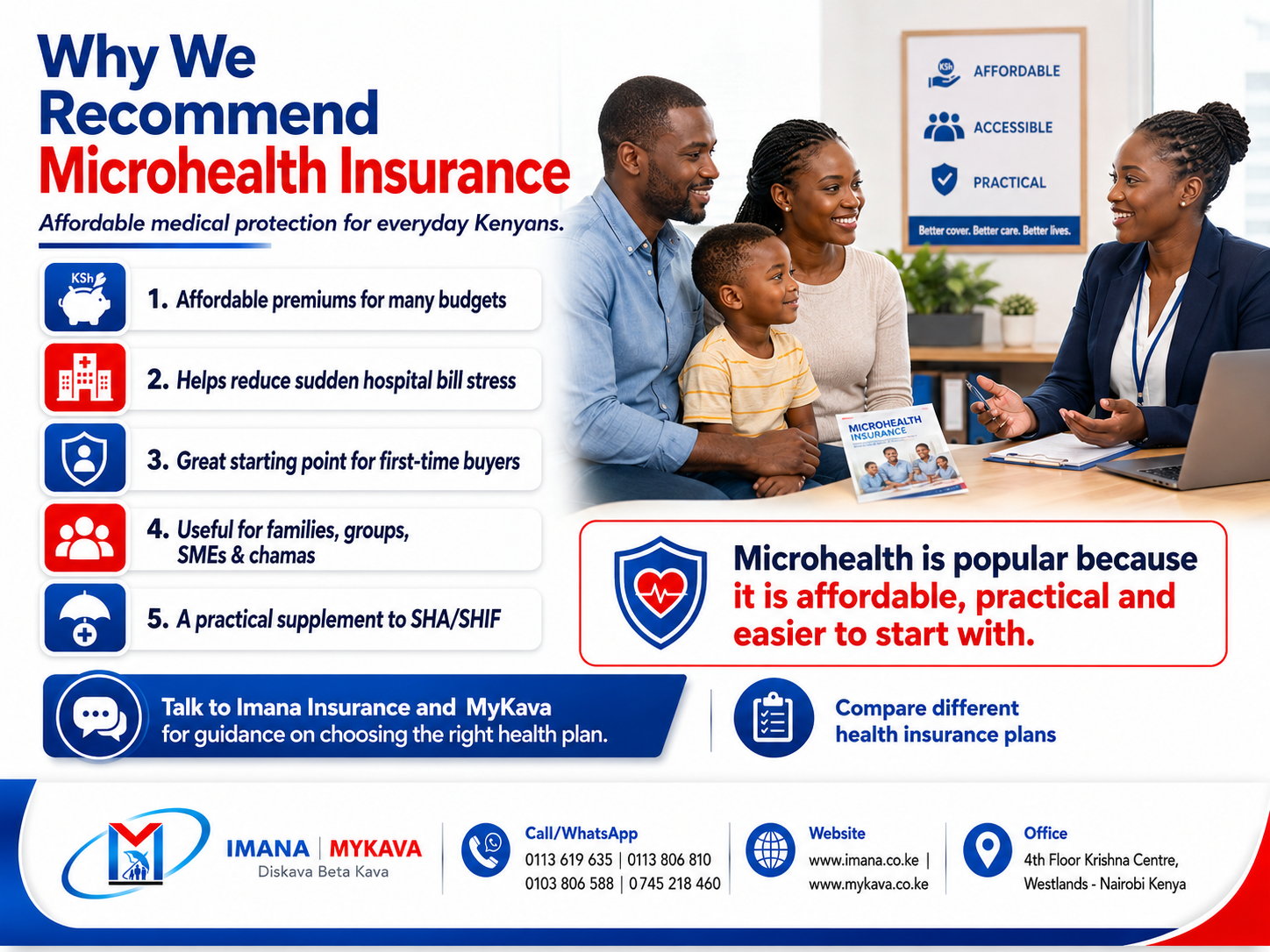
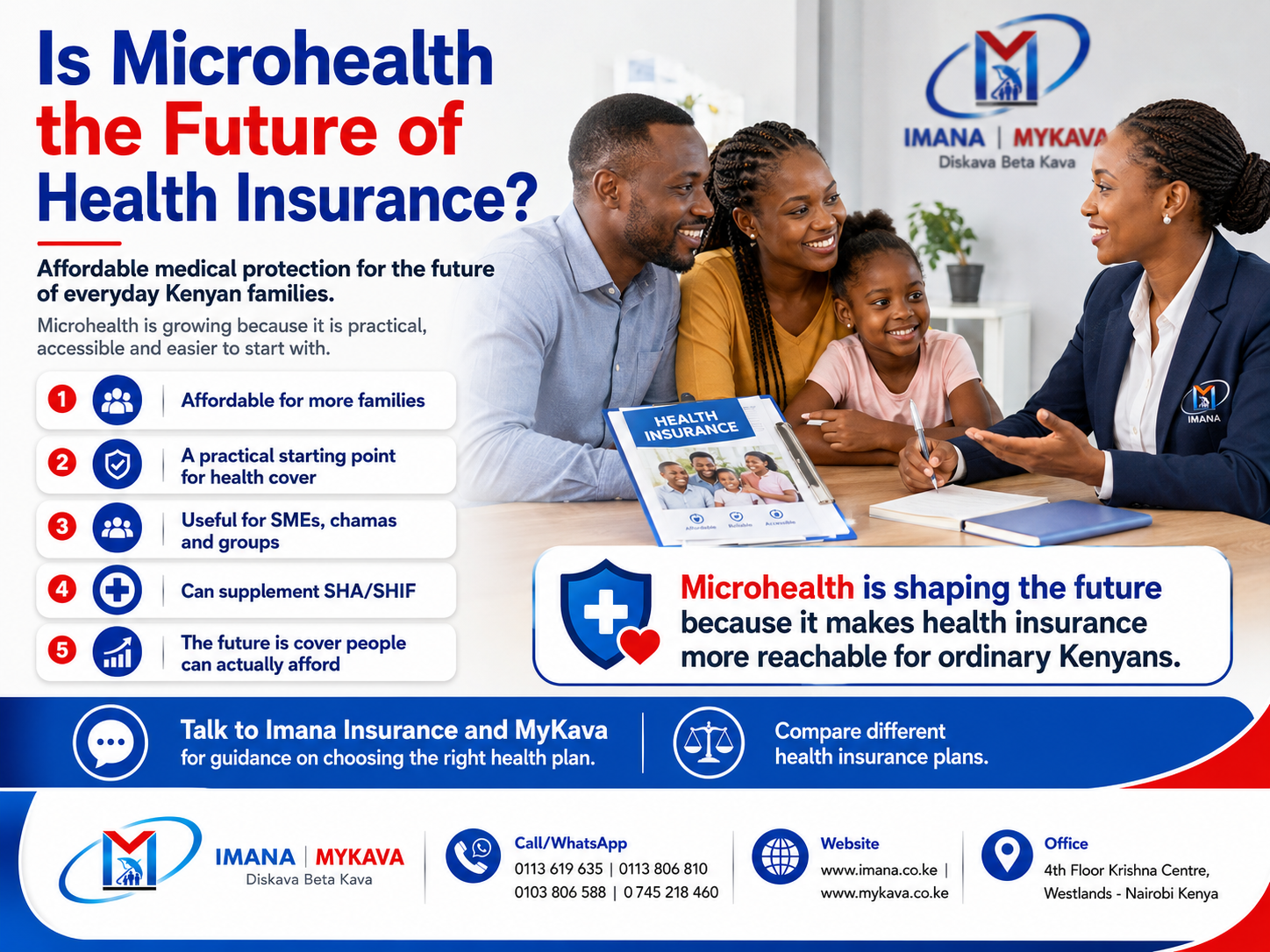
At Imana Insurance Agency Kenya Ltd and MyKava Online Insurance Consultants, we recommend microhealth insurance because it is affordable, practical, easier to start with, and suitable for families that want protection without paying very high premiums.
1. Microhealth Is More Affordable for Many Families
Most families want medical insurance, but traditional medical covers can sometimes feel expensive, especially when covering parents, children, and dependants.
Microhealth gives families a softer entry point.
It allows a household to start with a manageable premium and still enjoy important medical protection such as inpatient cover, outpatient support, or other benefits depending on the plan selected.
For many families, this is better than having no cover at all.
A small cover today can save a family from a big hospital burden tomorrow.
2. Urban Families Face High Hospital Costs
Urban families often live near private hospitals, clinics, specialist centres, and major medical facilities. That is good, but it also means treatment costs can rise very quickly.
In towns and cities, families may deal with:
- Higher consultation fees
- Costly lab tests and scans
- Expensive medication
- Specialist reviews
- Emergency admissions
- Higher inpatient bills
- Outpatient costs that repeat every month
For a family living in Nairobi, Mombasa, Kisumu, Nakuru, Eldoret, Thika, Kitengela, Kiambu, Rongai, Ruiru, Athi River, or any fast-growing town, medical bills can hit hard.
Microhealth helps urban families manage that risk without necessarily jumping straight into the most expensive health cover.
3. Rural Families Also Need Medical Protection
Some people assume rural families do not need medical insurance because treatment is “cheaper mashinani.”
That thinking is dangerous.
Rural families still face medical emergencies. Sometimes, the challenge is even bigger because a serious case may require referral to a bigger hospital in town.
That can mean:
- Transport costs
- Referral costs
- Admission expenses
- Lab tests and imaging
- Family travel and accommodation costs
- Loss of income while caring for a sick relative
A rural family may start treatment at a local facility, but if the case is serious, they may be referred to a bigger hospital in the county or another town.
Microhealth can help reduce the pressure when such moments come.
4. It Helps Families Avoid Emergency Fundraising
In Kenya, many medical emergencies turn into WhatsApp fundraising campaigns.
A child is admitted.
A parent needs surgery.
A relative is referred to a bigger hospital.
A hospital bill starts growing.
Then someone creates a group and says, “Please support us.”
Fundraising is not bad. Communities are built on helping each other.
But fundraising should not be the only health plan.
Microhealth insurance helps families prepare before trouble knocks. It gives them a safety net, especially for hospital bills that come without warning.
5. It Works Well for Families With Irregular Income
Not every family has a fixed salary.
Many Kenyans survive through business, farming, casual work, boda boda, online gigs, shopkeeping, transport, chama savings, construction jobs, or seasonal income.
For such families, expensive medical insurance may feel out of reach.
Microhealth is more realistic because it is designed to be affordable and accessible to more people.
It fits families that are trying to balance:
- Rent or house expenses
- School fees
- Food
- Transport
- Farm inputs
- Business stock
- Loans
- Family responsibilities
- Medical emergencies
Life is already expensive. Microhealth respects that reality.
6. It Is Good for Children and Young Families
Children fall sick often. Sometimes it is fever, infections, stomach issues, injuries, allergies, or other common childhood conditions.
For young families, hospital visits can become frequent and financially draining.
Microhealth can help parents protect their children without waiting until sickness comes.
A family does not need to be wealthy to start planning for medical costs. They just need a cover that matches their budget and real-life needs.
7. It Can Support Older Parents and Dependants
Many Kenyan families support elderly parents or older dependants, especially in rural areas.
As people grow older, medical needs usually increase. They may require regular check-ups, medication, monitoring, or admission when conditions become serious.
Microhealth may not solve every medical need, but it can reduce the burden and give families a starting point.
This matters because older dependants can become financially vulnerable when there is no medical plan in place.
8. It Can Supplement SHA/SHIF
SHA/SHIF is important, but many families still want extra protection.
Microhealth can act as an additional layer depending on the benefits selected.
For example, a family may use public health coverage where applicable, then add microhealth to support selected inpatient, outpatient, or other medical benefits.
This is especially useful when a family wants more flexibility, faster access, or a better hospital panel depending on the plan.
9. It Is Suitable for Chamas, Welfare Groups and SMEs
Microhealth is not only for individuals.
It can work very well for groups such as:
- Chamas
- Welfare groups
- Churches
- Saccos
- SMEs
- Small businesses
- Family groups
- Farmers’ groups
- Boda boda groups
- Community associations
Many groups already contribute money when a member gets sick. Microhealth can make that support more organized and predictable.
Instead of reacting only when someone is admitted, the group can plan ahead.
10. It Gives Families a Practical Starting Point
The truth is simple: not every family can afford a high-end medical cover immediately.
But that does not mean they should remain completely exposed.
Microhealth gives families a way to start.
Start small.
Understand the benefits.
Use the hospital panel wisely.
Renew consistently.
Upgrade later when income improves.
That is a smarter path than waiting for the “perfect” cover while having no protection at all.
Why Talk to Imana Insurance and MyKava?
At Imana Insurance Agency Kenya Ltd and MyKava Online Insurance Consultants, we help families compare different health insurance options before buying.
We guide you through:
- Microhealth insurance
- Family medical insurance
- Children’s medical cover
- Senior medical insurance
- SME and group medical cover
- Corporate health insurance
- Inpatient and outpatient benefits
- Hospital panel choices
- Waiting periods
- Exclusions
- Chronic and pre-existing condition considerations
We help you understand what you are buying, what is covered, what is not covered, and which plan fits your budget.
Because medical insurance is not just about buying the cheapest cover. It is about buying the cover that can actually help when sickness comes.
Useful Imana and MyKava Links
For quotes, guidance, and health insurance options, visit:
- Imana Health Insurance: https://imana.co.ke/insurance/imana-health
- Health Insurance in Kenya: https://imana.co.ke/insurance/health-insurance
- Microhealth Quote: https://imana.co.ke/micro-quote
- Corporate Medical Quote: https://imana.co.ke/corporate-quote
- Last Expense Quote: https://imana.co.ke/last-expense-quote
- Contact Imana: https://imana.co.ke/contact-us
- MyKava Online Insurance Consultants: https://www.mykava.co.ke
- Imana Insurance Agency Kenya Ltd: https://www.imana.co.ke
We recommend microhealth insurance for both urban and rural families because sickness is a shared risk.
Urban families face high hospital costs.
Rural families face referral and access challenges.
Young families need protection for children.
Older parents need medical support.
Self-employed families need affordable options.
Groups and chamas need structured protection.
Microhealth may not be the biggest cover in the market, but for many Kenyan families, it is the most realistic place to start.
Start where you are. Protect what you can. Upgrade when you are able.
Talk to Imana Insurance or MyKava today and compare health insurance plans that fit your family, your budget, and your reality.
Call/WhatsApp: +254 113 806 810 | +254 103 806 588
Website: www.imana.co.ke | www.mykava.co.ke
Office: 4th Floor Krishna Centre, Westlands, Nairobi
Compare. Understand. Buy wisely. Because one hospital bill can change everything.