- Author: Raymond
- Category: Microhealth Insurance in Kenya
Is It More Practical to Buy Microhealth Instead of High-End Health Insurance?
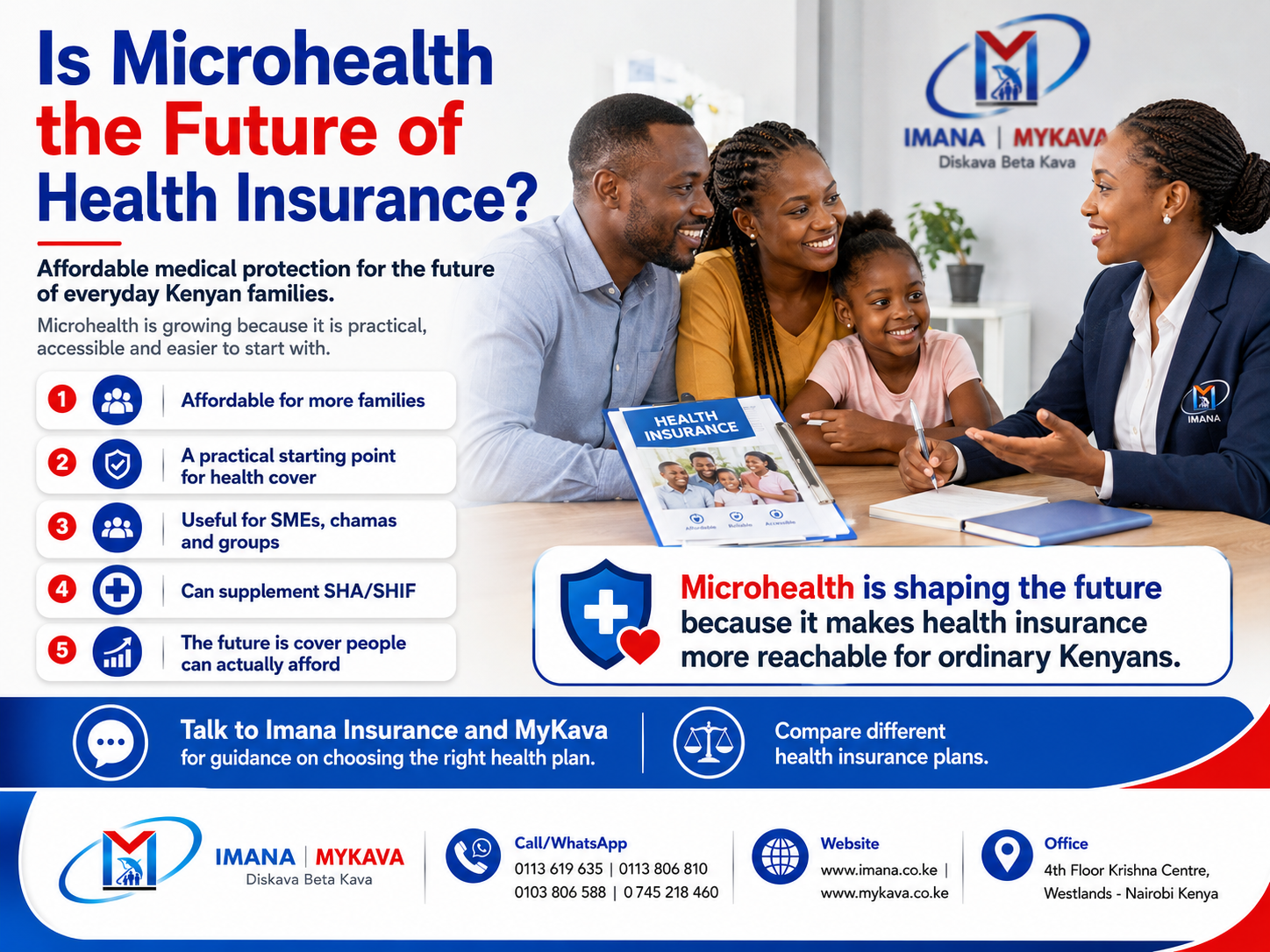
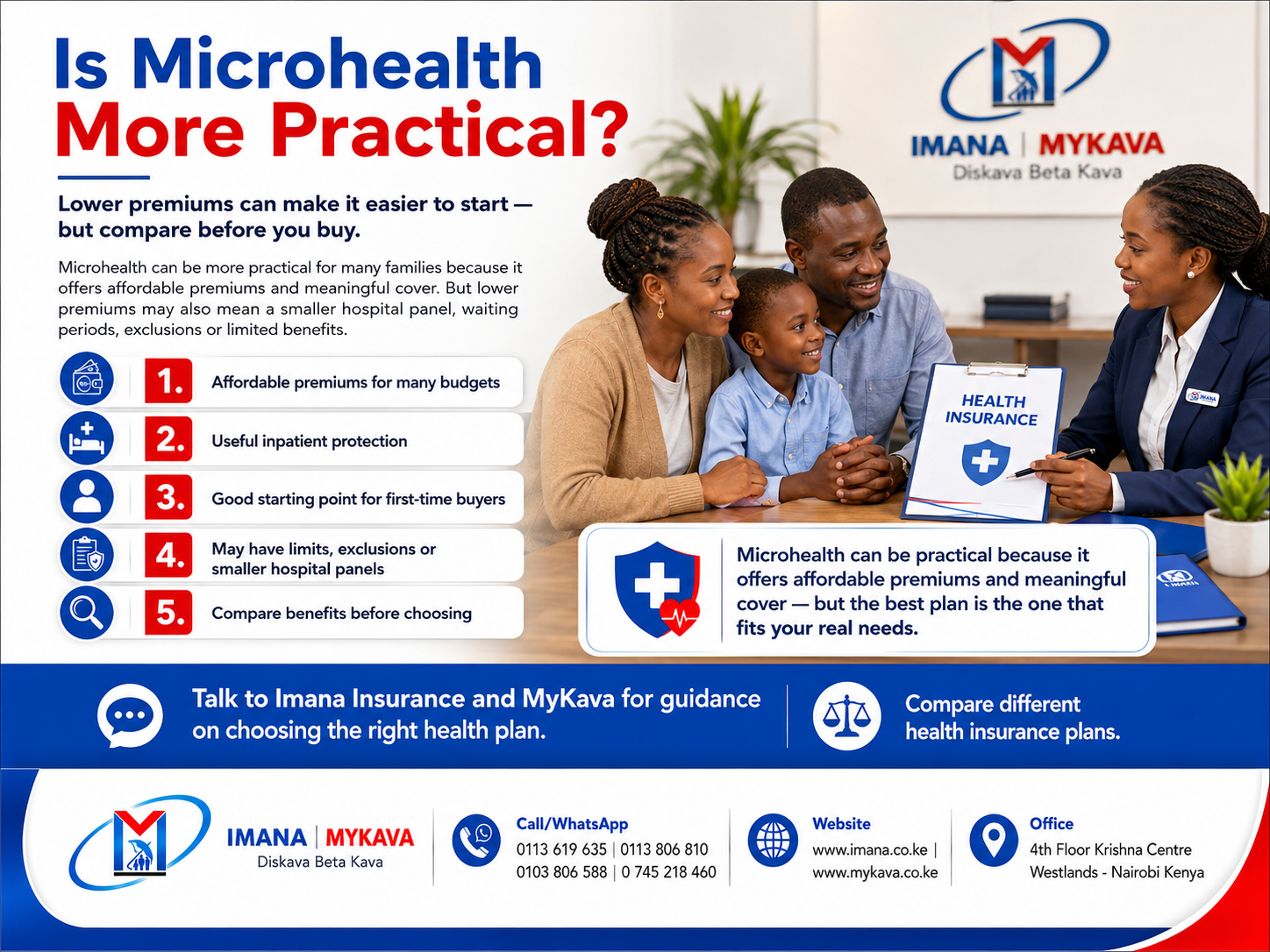
For many Kenyan families, individuals, SMEs, chamas and self-employed people, yes — microhealth insurance can be more practical than high-end medical insurance.
But let’s be very honest: microhealth is not automatically “better” than high-end medical insurance. It is better for a certain type of buyer — especially someone who wants affordable premiums, meaningful inpatient protection, and a realistic starting point without committing to very expensive annual premiums.
Microhealth works because it speaks to the reality of many Kenyans:
People want health insurance, but they also have rent, school fees, food, transport, business expenses, loans, family support and daily survival to think about.
So when a microhealth plan offers a strong inpatient limit at a lower premium, it becomes very attractive.
Why Microhealth Feels More Practical
The biggest reason is affordability.
Many high-end health insurance products come with wider hospital panels, broader outpatient benefits, better specialist access, stronger chronic condition support, higher maternity options and sometimes international or regional treatment access.
That is good — but it comes at a cost.
For many families, the premium can feel too heavy.
Microhealth gives people a different option:
Pay a lower premium, get essential medical protection, and avoid being completely exposed when hospital bills come.
That is why many people find it more practical.
Does Microhealth Offer Higher Cover Limits at Lower Premiums?
Sometimes, yes — especially when you compare the inpatient limit against the annual premium payable.
For example, a microhealth plan may offer an inpatient limit that looks very attractive compared to the premium charged. This makes it feel like good value because the client gets a meaningful hospitalization safety net without paying the price of a premium medical insurance product.
But here is the part people must understand:
A lower premium usually comes with conditions.
Those conditions may include:
- A specific hospital panel
- Waiting periods
- Benefit sub-limits
- Exclusions
- Limited outpatient benefits
- Limits on chronic and pre-existing conditions
- Group membership requirements in some plans
- Age restrictions
- Referral procedures
- Specific claim approval processes
So yes, microhealth can give strong value — but the buyer must understand exactly what is covered and what is not covered.
Cheap is only good when it works when you need it.
Microhealth Is Practical Because It Solves the “No Cover” Problem
The biggest competitor of microhealth is not always high-end insurance.
The real competitor is having no medical insurance at all.
Many people delay buying health insurance because they are waiting until they can afford the “best” cover.
But life does not wait.
A child can fall sick.
A parent can need admission.
A boda accident can happen.
A sudden surgery can come.
A hospital bill can rise overnight.
Microhealth gives people a way to start.
It says:
“Do not wait until you can afford everything. Start with what protects you today.”
That is practical.
When Microhealth Makes More Sense
Microhealth may be a smart choice if:
- Your budget is limited
- You want affordable inpatient protection
- You are buying medical insurance for the first time
- You are self-employed
- You run a small business
- You are covering your family gradually
- You belong to a chama, welfare group or SME
- You want extra cover alongside SHA/SHIF
- You want protection from sudden hospital bills
- You cannot currently afford a high-end medical plan
For many ordinary households, this is the sweet spot.
Not too expensive.
Not too complicated.
Not too far from reality.
When High-End Medical Insurance May Still Be Better
High-end health insurance still has its place.
It may be better if you want:
- Wider hospital access
- Premium private hospitals
- Larger outpatient benefits
- Better specialist care
- More chronic illness support
- International medical cover
- Higher maternity benefits
- Dental and optical benefits with better limits
- More flexible treatment options
- Stronger cover for complex medical needs
So the question is not simply:
“Is microhealth better than high-end insurance?”
The better question is:
“Which cover fits my health needs, budget, age, family size, hospital preference and medical history?”
That is where professional guidance becomes important.
Microhealth Is Like Starting With a Strong Safety Net
Think of health insurance like building a house.
High-end insurance may be like a bigger house with more rooms, better finishes and wider space.
Microhealth is like building a strong foundation first.
It may not give you everything, but it gives you somewhere to stand when medical bills begin to shake the ground.
And for many Kenyans, that foundation is exactly what they need.
Why You Should Compare Before Buying
Before buying microhealth or any medical insurance product, always check:
- What inpatient limit is offered
- Whether outpatient is included
- Which hospitals are on the panel
- Whether maternity is covered
- Whether dental and optical are included
- How chronic and pre-existing conditions are treated
- Waiting periods
- Exclusions
- Age limits
- Claim process
- Whether the plan is individual, family or group-based
- Renewal terms
Do not buy only because the poster says “affordable.”
Buy because you understand the cover.
Why Talk to Imana Insurance and MyKava?
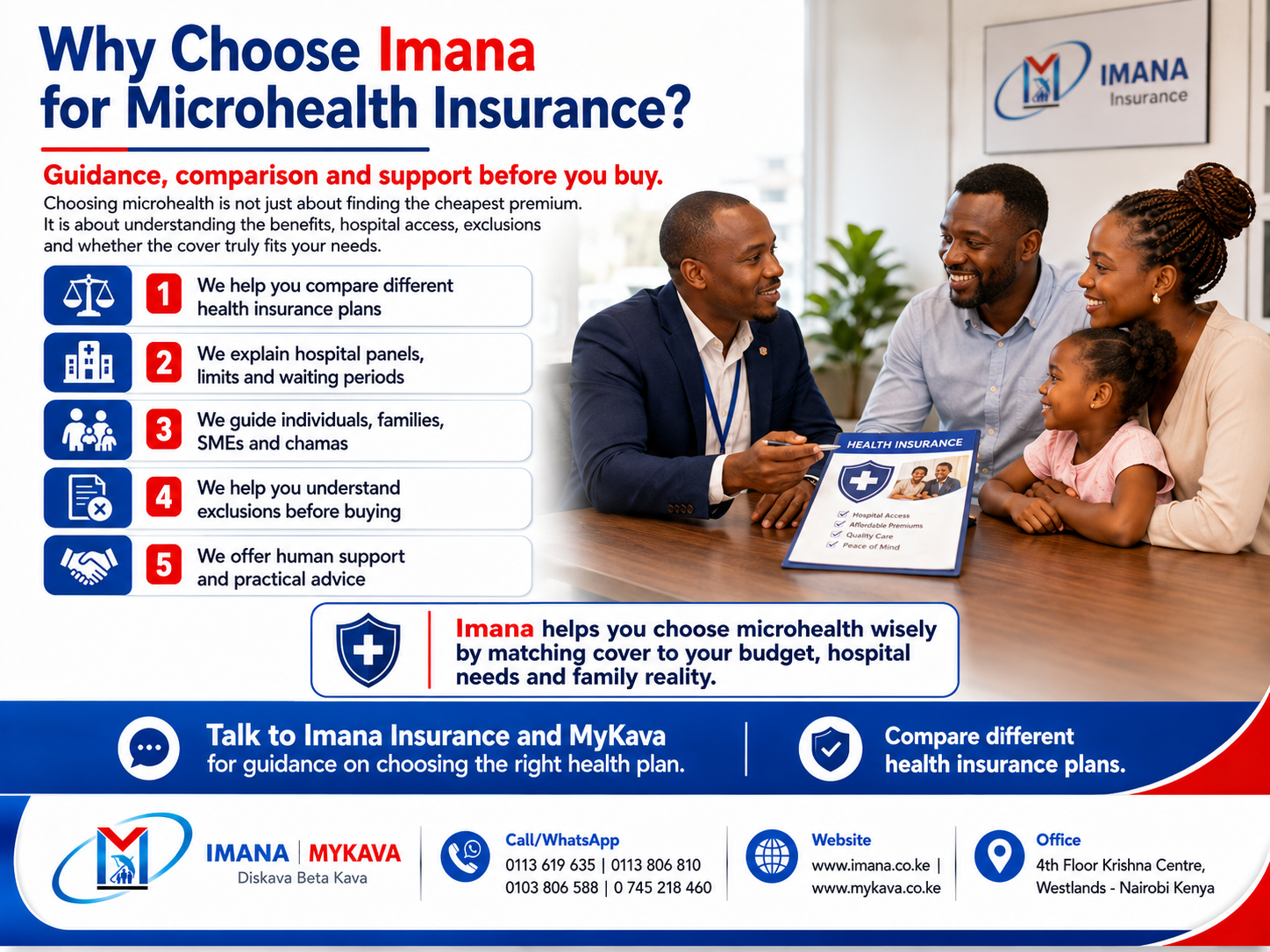
At Imana Insurance Agency Kenya Ltd and MyKava Online Insurance Consultants, we help clients compare microhealth, family medical insurance, senior medical covers, children’s covers, SME/group medical insurance and higher-end health plans.
We help you understand:
- Which plan fits your budget
- Which hospital panel works for you
- Whether the inpatient limit is enough
- Whether outpatient is included
- What waiting periods apply
- What exclusions to watch
- Whether microhealth or a higher-end plan makes more sense for you
Because sometimes microhealth is the smart move.
And sometimes, depending on your medical needs, age, hospital preference or chronic condition history, a stronger medical cover may be the safer option.
The goal is not just to buy cheap.
The goal is to buy wisely.
Useful Imana and MyKava Links
For guidance, quotes and health insurance options, visit:
- Imana Health Insurance: https://imana.co.ke/insurance/imana-health
- Health Insurance in Kenya: https://imana.co.ke/insurance/health-insurance
- Microhealth Quote: https://imana.co.ke/micro-quote
- Corporate Medical Quote: https://imana.co.ke/corporate-quote
- Last Expense Quote: https://imana.co.ke/last-expense-quote
- Contact Imana: https://imana.co.ke/contact-us
- MyKava Online Insurance Consultants: https://www.mykava.co.ke
- Imana Insurance Agency Kenya Ltd: https://www.imana.co.ke
Microhealth can be more practical than high-end health insurance for many Kenyans because it offers affordable premiums, useful cover limits, and a realistic starting point.
But it should not be bought blindly.
A lower premium may mean a smaller hospital panel, benefit limits, waiting periods or exclusions. So the best decision is to compare the cover properly before paying.
For many people, microhealth is not just cheaper.
It is more reachable, more realistic and easier to start with.
Talk to Imana Insurance or MyKava today and compare health insurance plans that fit your budget, family and real medical needs.
Call/WhatsApp: +254 113 806 810 | +254 103 806 588
Website: www.imana.co.ke | www.mykava.co.ke
Office: 4th Floor Krishna Centre, Westlands, Nairobi
Compare. Understand. Buy wisely. Because affordable cover only matters when it can stand with you at the hospital door.