- Author: Raymond
- Category: Tour Service Vehicles (TSV) Insurance
TSV Insurance in Kenya: Cover, Costs & Requirements
Learn about TSV insurance in Kenya, including cover options, passenger liability, safari use, COMESA Yellow Card, costs and quotation requirements.
TSV Insurance in Kenya: A Complete Guide for Tour Operators
Published: 23 October 2026 | Imana Insurance Agency
Your guests expect memorable journeys, comfortable transport and professional service. Suitable vehicle insurance helps your business prepare for the unexpected along the way.
Tourist Service Vehicle (TSV) insurance in Kenya is motor insurance arranged for a vehicle’s declared tourism operations. Depending on the policy selected, it can cover third-party liabilities, passenger legal liability, fire, theft and accidental damage to the insured vehicle.
For tour operators, choosing suitable cover starts with explaining how each vehicle is licensed, equipped and used. A safari Land Cruiser, tourist coach and modified expedition truck can have very different insurance requirements.
This guide explains the cover options, licensing considerations, passenger protection, cross-border arrangements, pricing factors and documents to prepare.
What is a Tourist Service Vehicle?
A Tourist Service Vehicle is defined in Kenya’s NTSA regulations as a vehicle operated by a licensed tour operator and used exclusively for carrying tourists. The definition includes private hire vehicles. See the NTSA Operation of Tourist Service Vehicles Regulations.
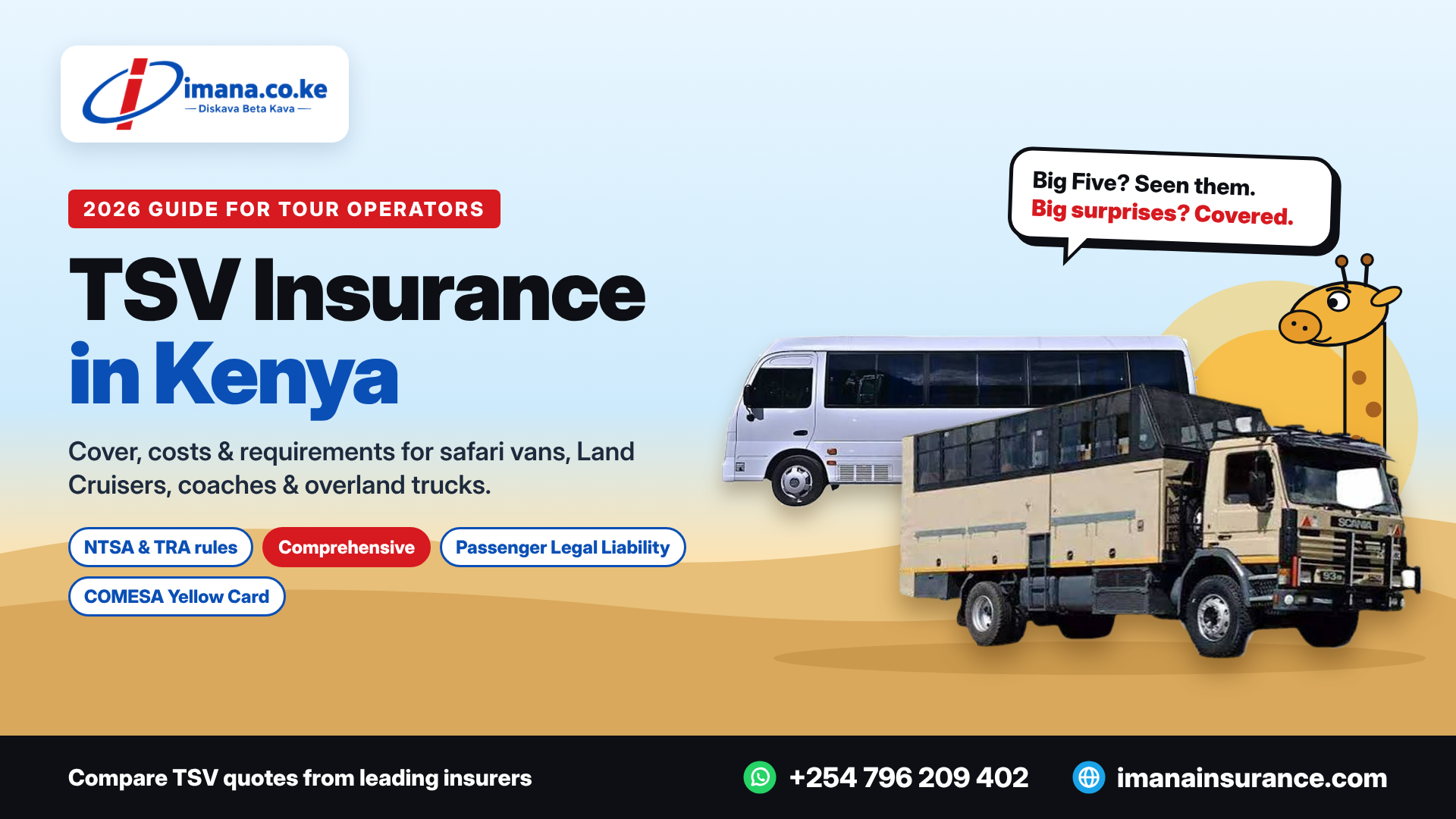
Vehicles commonly presented for tourism motor insurance include:
- Safari vans with pop-up roofs.
- Safari Land Cruisers and other 4x4 vehicles.
- Tourist minibuses and luxury coaches.
- Overland passenger trucks.
- Vehicles used for tourist transfers.
Specialist vehicles need individual assessment. An expedition camper, converted truck or open-sided resort shuttle does not automatically qualify for the same insurance category as a conventional tour van.
Tell the insurer about the vehicle’s registration, approved seating capacity, modifications and actual operations before arranging cover.
Is TSV insurance compulsory in Kenya?
Insurance is a requirement under Kenya’s tourist service vehicle regulatory framework.
The NTSA regulations list current third-party insurance among the documents required for a tourist service vehicle licence application. They also require insurance from an insurer licensed by the Insurance Regulatory Authority to provide that category of cover. See the NTSA tourist vehicle regulations on Kenya Law.
The Tourism Regulatory Authority lists vehicle insurance copies among its Class C requirements for tourist service vehicle hire businesses. See TRA’s Class C licensing requirements.
Insurance does not replace the relevant operating licences, inspections or driver qualifications. Review these requirements alongside your policy and keep the applicable documents current.
Is TSV insurance the same as PSV insurance?
The policy must expressly accommodate your tourist transport operations, whatever product label the insurer uses.
TSV refers to tourist service vehicle operations. PSV terminology also appears in passenger transport licensing and insurance. Insurers may organise their products under different commercial or passenger vehicle categories.
Avoid choosing a policy by its name alone. Ask the insurer to confirm that the insured use includes your actual tourism activities, such as game drives, excursions, airport transfers or cross-border tours.
A private-use policy should not be assumed to cover commercial tourist transport.
Types of TSV insurance cover in Kenya
The main cover options are Third-Party Only, Third-Party, Fire and Theft, and Comprehensive. Kenyan insurers offer these levels of commercial motor protection, although acceptance of a particular tour vehicle depends on underwriting.
Third-Party Only
Third-Party Only covers the legal liabilities specified in the policy arising from the use of the insured vehicle.
For a tourist vehicle, confirm the passenger liability provisions, third-party property damage cover and applicable limits.
This option does not cover accidental damage, fire or theft affecting your own vehicle. If your tour van is damaged in a collision, its repair costs are not covered under your own Third-Party Only policy.
Third-Party, Fire and Theft
This option includes the third-party liabilities specified in the policy, together with protection for insured vehicle loss or damage caused by fire or theft.
It generally does not cover accidental collision or overturning damage to your own vehicle.
Review security requirements, theft conditions, insured value and excesses before accepting a quotation.
Comprehensive Cover
Comprehensive cover provides broader protection. It generally includes accidental vehicle damage, fire, theft and specified third-party liabilities.
However, comprehensive does not mean every loss is covered.
For tourism operations, confirm safari use, passenger liability, fitted equipment, recovery benefits, territorial limits and exclusions. Financed vehicles may also have insurance requirements set by the lender.
Passenger Legal Liability: what should tour operators check?
Passenger Legal Liability concerns your insured legal liability for passenger death or bodily injury.
Do not assume it is available only with comprehensive insurance or that every policy provides the same passenger protection.
Ask your insurance adviser to explain:
- The permitted passenger-carrying use.
- The approved seating capacity reflected in the policy.
- The liability limit per person and per event.
- How boarding and alighting incidents are treated.
- Whether medical expenses are a separate benefit.
- How drivers, guides and other employees are covered.
A guide travelling as an employee may require different consideration from a paying tourist. Passenger liability insurance also serves a different purpose from a guest’s personal medical or travel insurance.
Does TSV insurance cover safari and off-road driving?
Safari and off-road use must be disclosed and confirmed under the policy.
Describe the routes your vehicles use, including public roads, designated game park tracks, remote campsites and demanding terrain.
For example, tell the insurer if a Land Cruiser regularly operates on safari tracks or an overland truck travels to remote locations where recovery services may be difficult to access.
Ask for written confirmation of the accepted use and review:
- Collision and overturning during declared operations.
- Water damage and relevant exclusions.
- Towing and recovery limits.
- Recovery from remote locations.
- Windscreen and accessory protection.
- Security and vehicle tracking conditions.
Do not assume towing includes unlimited recovery from any location. Check the financial limit, approved providers and whether cross-border recovery is included.
What about modified vehicles and fitted equipment?
Declare modifications and equipment before cover begins.
Tour vehicles often carry equipment that affects their value, construction or use. Examples include:
- Pop-up roofs and additional seating.
- Winches, bull bars and roof racks.
- Radios and fitted entertainment systems.
- Refrigerators and camping equipment.
- Camper conversions, kitchens and roof terraces.
Ask whether these items must be individually listed and valued. Also confirm whether loose equipment and passengers’ belongings require separate protection.
An expedition vehicle used privately may need a different policy from one operated commercially for tourist transport.
Cross-border insurance and the COMESA Yellow Card
A COMESA Yellow Card provides regional third-party motor liability protection within its applicable scope. It does not replace comprehensive cover for your own vehicle.
The official scheme explains that the Yellow Card is intended to meet compulsory third-party insurance requirements in participating countries and can apply to private and commercial vehicles. See the COMESA Yellow Card FAQs.
Before a tour to Tanzania, Uganda or another destination, confirm:
- Whether the arrangement applies to every country on the itinerary.
- Whether the cover dates include the complete journey.
- Whether your main motor policy extends own-vehicle damage and theft protection to those countries.
- Whether towing, recovery or vehicle repatriation is included.
- Which emergency contacts and documents the driver should carry.
Any medical-expense benefit should be checked against the actual terms and limits. Do not treat it as a substitute for comprehensive travel or medical insurance.
Other extensions worth discussing
Additional protection depends on the insurer, vehicle and underwriting terms.
Political Violence and Terrorism
Ask whether protection is available for specified political violence and terrorism risks.
Review strikes, riots and civil commotion separately. These risks may be addressed under different sections or extensions, so their treatment should be confirmed in the wording.
Excess Protector
An excess protector may reduce the amount you contribute towards certain insured claims.
Confirm which excesses it applies to, its limits and any exclusions. It should not be assumed to remove every contribution payable under the policy.
Emergency Medical Expenses
Some policies offer limited emergency medical expenses following an insured event.
Check who qualifies, the benefit limit and the supporting documents required.
Loss of Use and Business Interruption
Vehicle repairs can disrupt bookings, but motor damage cover should not be assumed to pay for cancelled tours, replacement transport or lost income.
Ask whether suitable additional protection is available for these costs.
How much does TSV insurance cost in Kenya?
There is no single premium that applies to every tourist service vehicle. A quotation is needed for your specific risk.
Insurers may assess:
- Vehicle type, age and value.
- Passenger capacity.
- Commercial use and operating routes.
- Claims history.
- Modifications and fitted equipment.
- Cross-border travel.
- Requested liability limits and extensions.
- Excesses and security arrangements.
For comprehensive cover, the insured value is an important pricing factor, and a valuation may be required.
Fleet arrangements may be available, but a lower rate is not guaranteed. The insurer will assess the vehicles and operations presented.
How to compare quotations properly
Compare the premium alongside the protection offered.
Review the insured value, passenger liability limits, excesses, exclusions, permitted use, territorial limits and recovery benefits.
A cheaper quotation may provide lower limits or require a larger contribution when you claim. Ask for the policy wording and schedule so that important differences are clear before payment.
Documents required for TSV insurance
Document requirements vary by insurer, ownership structure and vehicle type.
Prepare the following where applicable:
- Vehicle logbook.
- Individual owner’s ID or passport and KRA PIN certificate.
- Company registration documents and company KRA PIN.
- Directors’ identification or other company documents requested by the insurer.
- Applicable tourism and vehicle operating licences.
- Vehicle inspection documents.
- A valuation report for comprehensive cover, where required.
- Passenger capacity and details of vehicle use.
- Claims history.
- Details and values of modifications or equipment.
- Planned operating countries and routes.
For a fleet quotation, prepare a schedule showing each vehicle’s registration number, type, value, seating capacity and use.
If an operating licence application is pending, disclose this and confirm what the insurer needs to assess the risk. Arranging insurance does not authorise operations before the required licences are in place.
What to do after a TSV accident or theft
Prioritise safety, report promptly and follow your insurer’s claims instructions.
When an incident occurs:
- Obtain emergency assistance where needed.
- Report to the police as appropriate.
- Notify the insurer or insurance adviser promptly.
- Record photographs and relevant details where safe.
- Collect witness contacts and information about other vehicles involved.
- Preserve relevant passenger records and tracking information.
- Obtain the police and claims documents requested.
- Seek the insurer’s instructions before authorising repairs or making commitments about liability.
Keep emergency contacts accessible to every driver. Reporting deadlines and required evidence depend on the policy and the circumstances of the claim.
Frequently asked questions about TSV insurance in Kenya
What does TSV stand for?
TSV stands for Tourist Service Vehicle. Kenya’s NTSA regulations use the term for vehicles operated by licensed tour operators and used exclusively to carry tourists.
Can I use private car insurance for a tour van?
Do not assume a private-use policy permits commercial tourist transport. Declare the actual operations and obtain confirmation that the policy covers them.
Does Third-Party Only insurance cover passengers?
Applicable passenger liabilities depend on the law and the policy terms. Confirm the permitted use, passenger capacity and liability limits with the insurer.
Does comprehensive insurance automatically cover every safari activity?
No. Confirm the accepted routes, terrain, vehicle use and exclusions. Comprehensive cover remains subject to the policy wording.
Does TSV insurance cover tourists’ luggage?
Not necessarily. Ask whether passenger belongings are covered, under which section and subject to what limits.
Can I insure a resort shuttle or expedition camper?
These vehicles require individual assessment. Registration, construction, modifications and intended use will help determine the appropriate insurance category.
Does a COMESA Yellow Card cover damage to my own vehicle?
It is a regional third-party liability arrangement. Confirm own-vehicle damage, theft and recovery protection separately under your main policy.
Can I request insurance for a whole tour fleet?
Yes. Submit the vehicle schedule and operating details for assessment. Review both fleet terms and any conditions applying to individual vehicles.
How long does it take to arrange cover?
Timing depends on the documents, valuation requirements, vehicle type and underwriting approval. Confirm the effective date and required documentation before operating.
Request a TSV insurance quotation from Imana Insurance Agency
Whether you operate one safari van or a fleet of Land Cruisers, coaches and overland vehicles, start with cover that reflects your actual business.
Contact Imana Insurance Agency to discuss your vehicle, passenger capacity, equipment and operating routes. Request a tailored quotation and review the benefits, limits and excesses before choosing your policy.
WhatsApp: +254 796 209 402
Request a quotation: imanainsurance.com
Imana Insurance Agency. Diskava Beta Kava.
Information reviewed on 23 October 2026. Insurance is subject to vehicle eligibility, underwriting approval, policy terms, limits, excesses and exclusions. Confirm current operating and licensing requirements with NTSA and the Tourism Regulatory Authority.