- Author: Raymond
- Category: Insurance Claims
Medical Insurance Claims in Kenya: Pre-authorisation Guide
Learn how medical insurance claims work in Kenya, including pre-authorisation, cashless treatment, reimbursement, declined bills and appeals.
Having medical insurance does not mean every hospital bill will be paid automatically.
A medical claim must still meet the policy’s conditions, including active membership, waiting periods, hospital-network rules, benefit limits, referral procedures and pre-authorisation requirements.
Understanding these requirements before an illness or hospital admission can prevent stressful conversations at the hospital billing desk.
This guide explains how medical insurance claims work in Kenya, including cashless treatment, pre-authorisation, emergency admission, reimbursement, maternity claims, chronic-condition limits and how to challenge a declined bill.
Quick answer: Before planned treatment or hospital admission, confirm that the hospital is on your insurer’s panel, obtain any required referral and request pre-authorisation. During an emergency, prioritise treatment and notify the insurer as soon as reasonably possible. Keep every medical report, prescription, claim form, invoice and receipt.
Imana Insurance Agency Kenya Ltd helps individuals, families, SMEs and corporate clients compare medical insurance quotations and understand their policy benefits.
You can explore the Health Insurance Authority Page, review Imana Health options or compare medical insurance through MyKava.
What is a medical insurance claim?
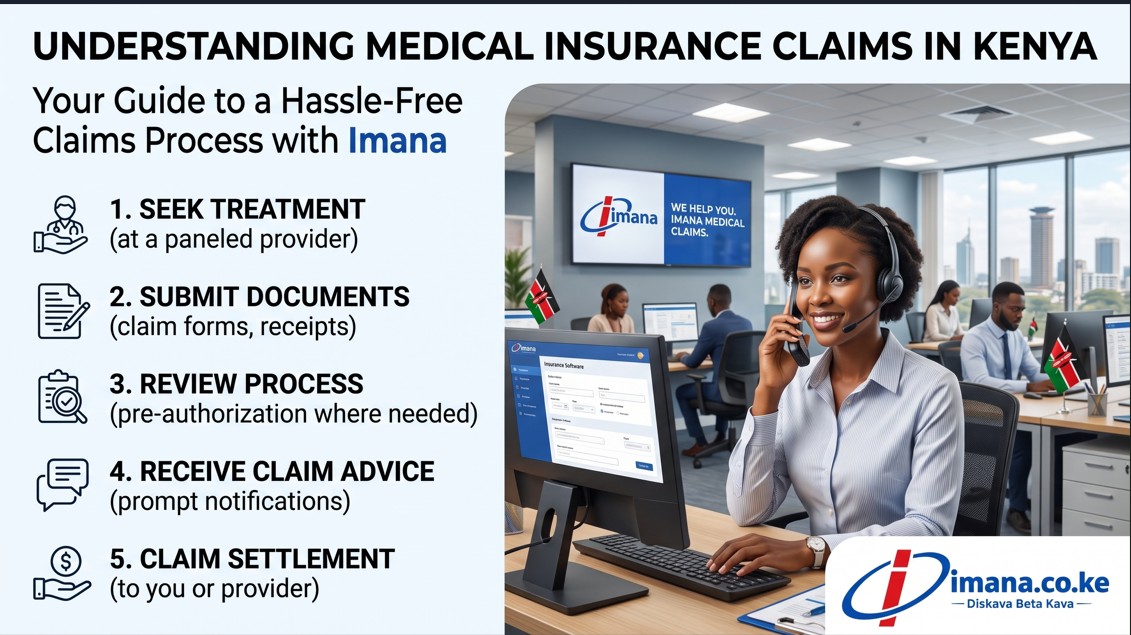
A medical insurance claim is a request for an insurer to pay an eligible healthcare expense under an active medical insurance policy.
The claim may be processed in two principal ways:
- Cashless or direct-settlement treatment: The insurer or medical administrator settles an approved bill directly with a panel hospital.
- Reimbursement: The member pays the medical bill and later asks the insurer to refund eligible expenses.
Payment remains subject to the policy’s benefits, exclusions, limits, waiting periods and claim procedures.
What is cashless medical treatment?
Cashless treatment allows an insured member to receive eligible treatment at a panel hospital without paying the entire approved bill personally.
The member normally presents:
- A medical insurance card or digital membership details
- National identification or another accepted identity document
- A referral letter where required
- The insurer’s pre-authorisation
- A co-payment, where applicable
“Cashless” does not always mean the patient pays nothing.
A member may still have to meet:
- A co-payment
- Expenses above a benefit limit
- Non-medical items
- An excluded treatment
- Charges above the insurer’s approved amount
- Services obtained outside the hospital network
- An exhausted benefit
- Treatment received during a waiting period
Always ask the hospital to explain any amount being requested before treatment or discharge.
What is medical pre-authorisation?
Pre-authorisation is the insurer’s or medical administrator’s approval for a planned admission, procedure, investigation, medication or other treatment before it is provided.
It allows the insurer to confirm:
- That the patient is an active member
- That the hospital is on the approved panel
- That the condition is covered
- That the applicable waiting period has been completed
- That sufficient benefits remain
- That the treatment is medically necessary
- That the proposed cost is reasonable
- That any required referral has been obtained
- That no exclusion or special condition applies
Pre-authorisation is common for:
- Hospital admission
- Surgery
- CT and MRI scans
- Specialist procedures
- High-cost medication
- Oncology treatment
- Dialysis
- Physiotherapy sessions
- Maternity admission
- Planned overseas treatment
- Medical evacuation
Pre-authorisation should be obtained before planned treatment begins.
It is not necessarily an unconditional promise that every final charge will be paid. The approved treatment, cost, hospital and admission period must still match the eventual claim.
How does hospital admission work?
Before a planned hospital admission:
- Confirm that the policy is active.
- Check that the hospital is on the insurer’s panel.
- Obtain the required referral.
- Ask the hospital to submit the admission request.
- Provide the medical reports and estimated treatment cost.
- Wait for written pre-authorisation.
- Confirm the authorised benefit and any co-payment.
- Ask whether further approval will be needed if the admission is extended.
The hospital usually communicates with the insurer or medical administrator. However, the patient or family should also keep a record of the authorisation number, approved treatment and contact person.
Do not assume that admission at a panel hospital automatically means the entire bill is covered.
What happens during an emergency admission?
In a genuine medical emergency, obtaining approval before treatment may not always be practical. The priority is stabilising the patient.
The patient, family member, employer or hospital should notify the insurer as soon as reasonably possible.
Provide:
- Patient’s name and membership number
- Hospital and location
- Date and time of admission
- Nature of the emergency
- Treating doctor’s details
- Preliminary diagnosis
- Estimated cost, if available
Some policies allow a limited emergency-notification window. The exact deadline differs between insurers and policies, so notification should never be postponed unnecessarily.
If the emergency hospital is outside the insurer’s panel, ask whether the patient should be transferred after stabilisation. A transfer should only occur when medically appropriate.
Do you need a referral letter?
Some medical plans require a patient to begin treatment at a designated primary-care facility before seeing a specialist or attending a higher-tier hospital.
A referral may be required for:
- Specialist consultation
- Advanced diagnostic tests
- Physiotherapy
- Surgery
- Treatment at a higher-level hospital
- Chronic-condition management
- Overseas treatment
Without the required referral, the insurer may reduce or decline the claim even where the treatment was medically necessary.
Before seeing a specialist, ask:
- Is a referral required?
- Who may issue it?
- How long is it valid?
- Does the specialist have to be on the panel?
- Is separate pre-authorisation required?
Emergency treatment may follow different rules, but the insurer should still be notified promptly.
Panel versus non-panel hospitals
A panel hospital is a healthcare provider contracted or recognised by the insurer or its medical administrator.
Using a panel hospital generally makes direct settlement easier because the provider can verify membership and request approval directly.
A non-panel hospital may require the patient to pay the bill and submit a reimbursement claim. Some policies may not reimburse non-panel treatment unless it was an emergency or written approval was obtained beforehand.
Hospital networks can also have different tiers. A policy may provide access to selected hospitals while excluding premium or high-cost facilities.
Before buying or renewing medical insurance, check whether the network includes hospitals near:
- Your home
- Your workplace
- Your children’s school
- Your parents’ residence
- Locations you visit frequently
Hospital panels can change. Confirm the current network with the insurer before seeking non-emergency treatment.
How do outpatient claims work?
Outpatient insurance generally covers eligible treatment where the member visits a healthcare provider without being formally admitted.
Depending on the plan, it may include:
- General practitioner consultations
- Specialist consultations
- Prescribed medication
- Laboratory tests
- Diagnostic imaging
- Minor procedures
- Physiotherapy
- Chronic-condition monitoring
- Dental and optical benefits where included
Outpatient claims may be declined or reduced where:
- The outpatient limit is exhausted
- The provider is outside the network
- A referral was required but not obtained
- The treatment is excluded
- Medication was not prescribed
- A benefit sublimit has been exceeded
- The claim falls within a waiting period
- The service was not medically necessary
- A co-payment was not made
Ask the hospital or clinic to confirm approval before receiving expensive tests, medication or specialist treatment.
What is a reimbursement claim?
A reimbursement claim arises when the member pays an eligible medical expense and applies for repayment from the insurer.
This may happen when:
- The approved cashless system is unavailable
- An emergency occurs at a non-panel hospital
- The insurer has authorised reimbursement
- Treatment is received outside Kenya
- The plan operates partly on a pay-and-claim basis
Do not assume that paying a medical bill guarantees reimbursement. Ask the insurer for written approval whenever possible.
Documents required for medical reimbursement
Requirements differ by policy, but the insurer may request:
- Completed medical claim form
- Member’s identification
- Policy or membership details
- Doctor’s medical report
- Diagnosis and treatment notes
- Original itemised invoices
- Original payment receipts
- Prescriptions
- Pharmacy receipts
- Laboratory or imaging reports
- Discharge summary
- Referral letter
- Pre-authorisation evidence
- Bank or mobile-payment details
- Proof of travel for an overseas claim
The invoice should explain what treatment was provided. A receipt showing only the total amount paid may not be sufficient.
Keep copies or clear scans of every document before submitting originals.
How long do reimbursement claims take?
There is no universal reimbursement period covering every Kenyan medical policy.
Processing depends on:
- The insurer’s service standards
- Completeness of the documents
- Verification of the treatment
- Whether further medical information is required
- Whether the provider must confirm the payment
- Whether the treatment occurred outside Kenya
- Whether the claim requires investigation
Request a claim reference number and the insurer’s expected processing period when submitting the documents.
If the insurer requests more information, respond promptly and retain written evidence of the submission.
How do waiting periods affect medical claims?
A waiting period is the period after a policy starts during which specified benefits or conditions are not yet claimable.
Waiting periods may apply to:
- General illness
- Maternity
- Dental and optical treatment
- Pre-existing conditions
- Chronic conditions
- Congenital conditions
- Specialist procedures
- Major surgery
Waiting periods vary considerably between insurers, products and group arrangements. Accidental injuries may receive different treatment from illness claims, but this must be confirmed from the policy.
Read Imana’s Health Insurance Waiting Periods Guide.
Never buy a medical policy based only on its annual limit. Ask when each benefit becomes available.
What is a pre-existing condition?
A pre-existing condition is generally an illness, injury, symptom or medical condition that existed—or was known—before the member joined the policy.
Examples may include:
- Diabetes
- Hypertension
- Asthma
- Cancer
- Heart disease
- Previous surgery
- Long-term back pain
- An existing pregnancy
- A condition already under investigation
Depending on the policy, a pre-existing condition may be:
- Covered after a waiting period
- Covered up to a specific sublimit
- Accepted at an additional premium
- Covered under a corporate arrangement
- Permanently excluded
Medical-history questions should be answered accurately. Concealing a material condition can lead to claim rejection or cancellation of cover.
How are chronic conditions covered?
Chronic conditions require ongoing treatment or monitoring over an extended period.
Examples include:
- Diabetes
- Hypertension
- Asthma
- Epilepsy
- Arthritis
- Chronic kidney disease
- Certain heart conditions
A policy may apply:
- A separate chronic-condition limit
- A combined chronic and pre-existing-condition limit
- Approved medication lists
- Designated clinics or pharmacies
- Referral requirements
- Disease-management programmes
- Waiting periods
The overall inpatient or outpatient limit does not necessarily determine how much is available for chronic treatment. A lower sublimit may apply.
Before choosing a medical plan, disclose the condition and request written confirmation of how it will be covered.
How do maternity claims work?
Maternity insurance may cover eligible costs associated with:
- Antenatal consultations
- Routine scans and tests
- Normal delivery
- Caesarean delivery
- Pregnancy complications
- Postnatal treatment
- Newborn care, subject to the policy
Maternity claims commonly have:
- A waiting period
- A separate maternity limit
- Hospital-network restrictions
- Age restrictions
- Limits on antenatal and postnatal care
- Rules for newborn notification
- Restrictions relating to fertility treatment
Pre-authorisation should be obtained before a planned maternity admission.
An existing pregnancy at the commencement of an individual or family policy will not normally be treated as a new, unknown risk. Never promise immediate maternity cover without written confirmation from the insurer.
For more information, read Imana’s Maternity Insurance Covers in Kenya.
What treatments are commonly excluded?
Exclusions differ between policies. Common examples may include:
- Cosmetic treatment not medically necessary
- Experimental or unproven treatment
- Fertility treatment unless specifically included
- Treatment during an applicable waiting period
- Non-prescribed medication
- Routine health products
- Self-inflicted injury
- Treatment arising from excluded hazardous activities
- Services received from an unauthorised provider
- Costs above reasonable and customary charges
- Treatment outside the geographical area
- Non-medical hospital expenses
Some treatments that are excluded under one product may be covered under another. Read the actual policy wording and benefit schedule instead of relying on general assumptions.
What is benefit exhaustion?
Benefit exhaustion means the available annual limit or sublimit has been fully used.
A member may exhaust:
- The overall annual limit
- Inpatient cover
- Outpatient cover
- Maternity benefits
- Dental benefits
- Optical benefits
- Chronic-condition benefits
- Oncology benefits
- Last-expense benefits
- Overseas-treatment benefits
When a benefit is exhausted, the insurer may decline additional claims under that section even if the overall policy is still active.
Request regular utilisation statements, particularly where several family members share one limit.
What is a medical insurance co-payment?
A co-payment is the amount or percentage the member contributes when using a medical service.
It may be:
- A fixed amount per outpatient visit
- A percentage of the hospital bill
- A charge for using selected hospitals
- A contribution towards medication
- A penalty for bypassing the required referral route
For example, a policy may require the member to pay a stated amount during each outpatient visit while the insurer pays the eligible balance.
A co-payment is not necessarily evidence that the claim has been declined. It is often a cost-sharing feature written into the policy.
Confirm co-payments before purchasing cover, especially for frequently used hospitals.
Why are medical bills declined?
A hospital bill or reimbursement claim may be declined because:
- The policy or membership was inactive
- The condition was within a waiting period
- The treatment related to an undisclosed condition
- The hospital was outside the approved network
- Pre-authorisation was not obtained
- A required referral was missing
- The benefit or sublimit was exhausted
- The treatment was excluded
- The claim documents were incomplete
- The cost exceeded the approved amount
- The treatment was considered medically unnecessary
- The member’s details did not match
- The claimed service was not provided
- The provider submitted incorrect billing codes
- The treatment fell outside the geographical scope
- Material information was misrepresented
A declined bill should not be accepted or disputed blindly. First establish the exact reason and the policy clause being applied.
What should you do when a hospital bill is declined?
At the hospital:
- Ask for the decline reason or response code.
- Confirm that the correct membership number was used.
- Check whether the policy is active.
- Ask whether the hospital submitted the correct diagnosis and procedure.
- Confirm whether pre-authorisation or a referral was required.
- Contact the insurer, medical administrator or Imana.
- Ask whether additional medical information can resolve the issue.
- Request a written decision if the matter remains unresolved.
Do not leave original documents at the hospital without keeping copies.
Where treatment cannot wait, discuss available payment arrangements and whether reimbursement may be considered. Reimbursement is not guaranteed unless supported by the policy or written approval.
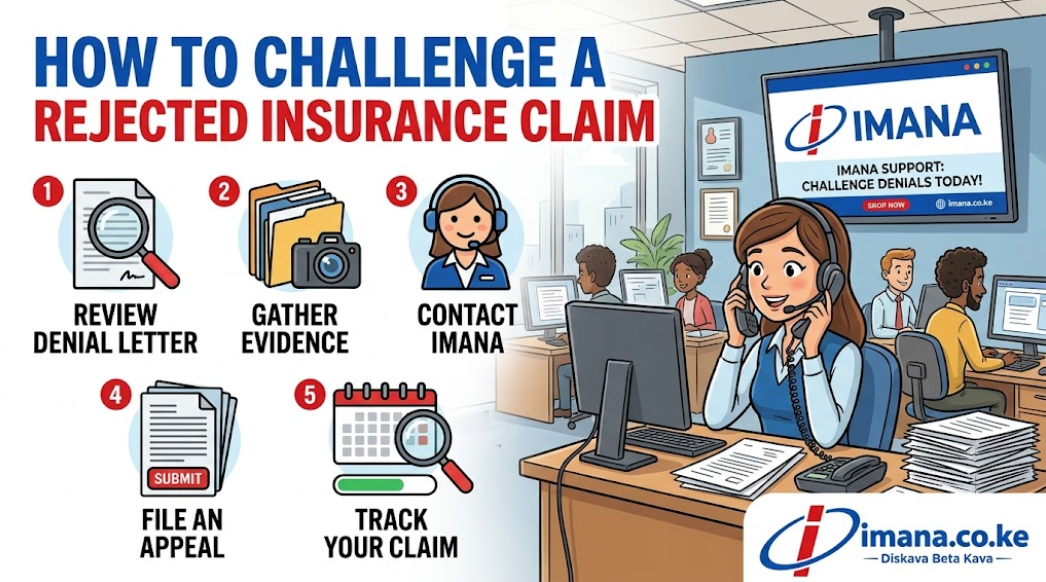
How do you appeal a medical claim decision?
If a claim is declined or reduced:
Step 1: Request the reason in writing
Ask the insurer to identify:
- The reason for the decision
- The policy clause relied upon
- The affected benefit
- The available limit
- Any missing documentation
- The appeal procedure
Step 2: Review the policy
Check the benefit schedule, waiting periods, endorsements, exclusions, provider network and special conditions.
Step 3: Collect supporting evidence
This may include:
- Treating doctor’s explanation
- Referral letter
- Medical reports
- Pre-authorisation correspondence
- Itemised invoice
- Proof of payment
- Membership confirmation
- Evidence of emergency admission
- Previous approval for related treatment
Step 4: Submit a formal appeal
State clearly:
- The claim number
- The disputed amount
- Why the decision should be reconsidered
- The documents supporting the appeal
- The outcome requested
Keep the appeal factual and concise.
Step 5: Escalate internally
If the first response does not resolve the matter, request review by the insurer’s complaints, medical or claims-management team.
Step 6: Seek regulatory assistance
If the insurer’s internal process does not resolve the complaint, a customer may approach Kenya’s Insurance Regulatory Authority. The IRA’s complaint portal specifically accommodates matters involving claim delays and claim denials.
Imana Insurance Agency can help its customers organise the documents and follow the appropriate communication pathway, but the insurer retains responsibility for claim decisions.
How can medical claim delays be prevented?
Before treatment:
- Read the benefit schedule
- Confirm that membership is active
- Check the hospital panel
- Obtain referrals
- Request pre-authorisation
- Confirm remaining limits
- Understand applicable co-payments
- Ask about waiting periods
During treatment:
- Keep the insurer informed
- Obtain approval for extended admission
- Confirm approval for additional procedures
- Retain medical reports and prescriptions
- Review the hospital’s itemised bill
After treatment:
- Complete claim forms fully
- Submit documents promptly
- Keep copies
- Obtain a claim reference
- Respond quickly to questions
- Follow up in writing
A medical policy works best when its rules are understood before the hospital visit—not while the patient is waiting for discharge.
Medical insurance claims checklist
Before submitting a claim, confirm that you have:
- The member’s identification details
- Policy or membership number
- Completed claim form
- Doctor’s report
- Diagnosis and treatment notes
- Referral letter where required
- Pre-authorisation reference
- Itemised invoices
- Original receipts
- Prescriptions
- Test results
- Discharge summary for admission
- Bank details for reimbursement
- Copies of all submitted documents
Ask the insurer whether original documents are required.
How Imana supports medical insurance customers
Imana Insurance Agency Kenya Ltd can assist customers by:
- Explaining medical benefits before purchase
- Comparing insurer quotations
- Checking hospital-network requirements
- Clarifying waiting periods and sublimits
- Helping customers understand pre-authorisation
- Guiding customers on reimbursement documents
- Following up on pending claim requirements
- Helping customers request written reasons for declined bills
- Supporting communication during a claim appeal
- Reviewing cover before renewal
Imana does not make the final clinical, authorisation or settlement decision. These decisions remain with the insurer, medical administrator and healthcare provider under the policy terms.
Compare medical insurance before buying
The cheapest medical insurance is not always the most useful.
Compare:
- Inpatient and outpatient limits
- Hospital networks
- Waiting periods
- Pre-existing-condition terms
- Chronic-condition limits
- Maternity benefits
- Dental and optical cover
- Co-payments
- Referral rules
- Emergency-treatment procedures
- Reimbursement conditions
- Territorial scope
- Claim-support arrangements
Helpful Imana resources include:
- Health Insurance in Kenya
- Imana Health Insurance
- Medical Insurance Price Guide
- Waiting Periods and Medical Insurance Terms
- SHA versus Private Medical Insurance
- Senior Citizen Medical Insurance
- Child and Family Medical Insurance Options
- Affordable Medical Insurance Covers in Kenya
For digital comparison, explore MyKava Medical Insurance.
Frequently asked questions
Can I use medical insurance immediately after buying it?
Some benefits may become available immediately, while others have waiting periods. Check the policy schedule instead of assuming that every benefit starts on the same date.
Can a hospital treat me without pre-authorisation?
A hospital can provide treatment, particularly during an emergency, but whether the insurer pays depends on the policy and notification requirements.
Does pre-authorisation guarantee payment?
Not always. It normally applies to the treatment, cost and circumstances presented when approval was requested. Unapproved services, exclusions or inaccurate information may affect the final settlement.
Can I visit any hospital?
Only if the policy allows it. Cashless treatment normally depends on the hospital network. Non-panel treatment may be excluded or handled through reimbursement.
Can I claim after paying cash?
Possibly, if reimbursement is permitted. Obtain approval where possible and keep itemised invoices, receipts, medical reports and prescriptions.
Why did the insurer approve admission but decline part of the bill?
Some items may be excluded, above the approved amount, non-medical, outside the available benefit or unrelated to the authorised treatment.
Can I appeal a declined medical bill?
Yes. Request the written reason, identify the relevant policy clause, provide supporting medical evidence and follow the insurer’s appeal procedure.
Does Imana approve medical claims?
No. Imana helps customers understand and navigate the process, but the insurer or medical administrator makes the claim decision.
Get medical insurance claims or quotation assistance
For medical insurance comparison, policy guidance or claims assistance, contact:
Imana Insurance Agency Kenya Ltd
4th Floor, Krishna Centre
Woodvale Grove, Westlands, Nairobi
Call/WhatsApp: +254 796 209 402
Websites:
- www.imanainsurance.com — insurance quotation comparison and enquiries
- www.imana.co.ke — Kenyan insurance authority and product information
- www.mykava.co.ke — travel and medical insurance comparison
Imana Insurance Agency Kenya Ltd is a Westlands-based insurance intermediary helping individuals, families and businesses compare insurance quotations from licensed Kenyan insurers across Motor, Medical, WIBA, PSV, Travel, Motorcycle, Cyber, SME/Corporate and other insurance classes.
Author: Raymond Momanyi
Founder & CEO, Imana Insurance Agency Kenya Ltd
Disclaimer: This article provides general information. Medical benefits, limits, hospital networks, waiting periods, exclusions and claim requirements vary by insurer and policy. Always read the applicable policy document and obtain written confirmation from the insurer or medical administrator.