- Author: Raymond
- Category: Expat Insurance in Kenya
Insurance for Embassies, Diplomats and International Organizations in Kenya
Explore insurance solutions for embassies, diplomats, UN agencies, NGOs and international organizations in Kenya, including duty-free motor, medical, property, WIBA, liability, cyber, travel and marine insurance.
Insurance Solutions for Kenya’s Diplomatic and International Community
Kenya hosts a significant diplomatic and international community, including foreign missions, United Nations agencies, intergovernmental bodies and international organizations.
The Ministry of Foreign Affairs currently states that Kenya serves 93 resident foreign diplomatic missions, 36 non-resident missions, 48 United Nations agencies and 113 intergovernmental and international organizations. The Ministry is also responsible for administering diplomatic privileges and immunities for the Diplomatic Corps, UNON and international and regional organizations based in Kenya. (Ministry of Foreign Affairs)
These institutions operate offices, employ personnel, own or lease property, use vehicles, organise events, process sensitive information and support international programmes.
Their insurance needs may therefore extend beyond standard retail policies.
A suitable insurance programme can protect:
- Embassy and mission premises
- Diplomatic and official vehicles
- International and locally recruited employees
- Office equipment and technology
- Official residences
- Visitors and members of the public
- Organisational data
- International travel
- Imported equipment and supplies
- Programme operations
- Business continuity
Diplomatic status may provide specific privileges and immunities, but it does not eliminate operational risks such as accidents, fire, theft, employee injury, cyber incidents or property damage.
Who May Need Diplomatic and International Organization Insurance?
Specialised insurance may be arranged for:
- Embassies
- High commissions
- Consulates
- Permanent missions
- Diplomatic residences
- United Nations agencies
- Intergovernmental organizations
- International NGOs
- Development agencies
- Foreign foundations
- International schools
- Cultural institutes
- Trade missions
- Foreign chambers of commerce
- Diplomatic personnel
- Expatriate employees
- Dependants of international personnel
- Contractors serving international organizations
The final insurance structure should reflect the organization’s legal status, host-country agreement, activities, assets and contractual obligations.
Diplomatic Privileges and Insurance Obligations
Kenya’s Privileges and Immunities Act gives effect to specified diplomatic and international privileges, while separate legal orders may apply to particular international bodies and their officials. The exact privileges depend on the person, organization, position and applicable agreement or legal notice. (Kenya Law)
Diplomatic immunity should not be confused with insurance.
Insurance addresses financial risks such as:
- Physical loss
- Accidental damage
- Medical treatment
- Employee compensation
- Legal defence
- Operational interruption
- Data breaches
- Motor accidents
Whether a legal claim can proceed against a mission or official may require specialist legal interpretation. Insurance quotations should therefore be reviewed alongside the organization’s host-country agreement and legal advice where necessary.
Essential Insurance Covers for Embassies and International Organizations
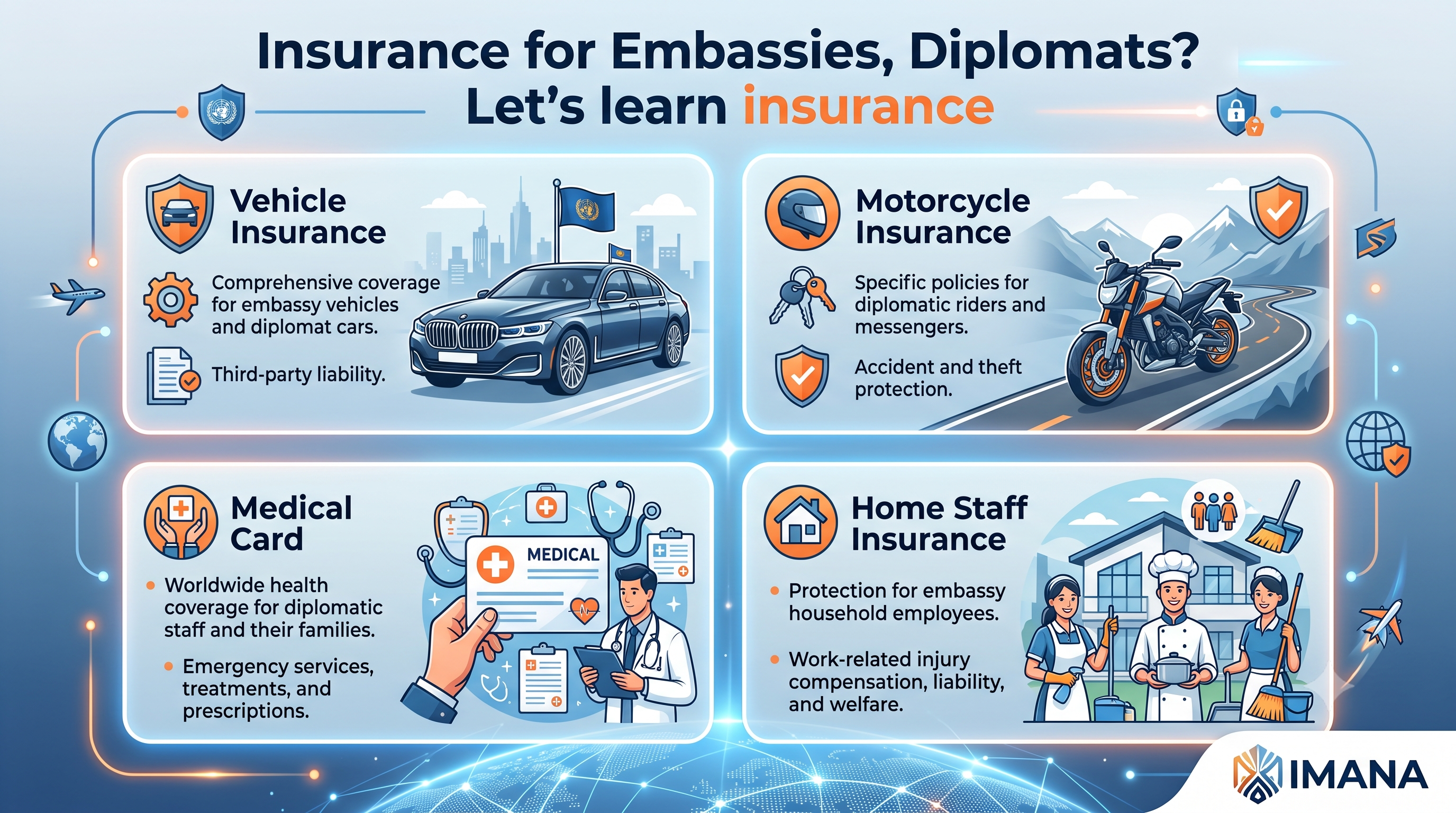
1. Diplomatic and Duty-Free Motor Insurance
Embassies, diplomats and qualifying international personnel may own:
- Duty-free private vehicles
- Official mission vehicles
- Pool vehicles
- Security vehicles
- Staff vehicles
- Utility vehicles
- Motorcycles
- Shuttle vans
These vehicles should be insured under the correct ownership, registration and use classification.
Available options may include:
Comprehensive Motor Insurance
This may cover:
- Accidental damage
- Fire
- Theft
- Third-party liability
- Malicious damage
- Other insured risks
Third-Party Only Insurance
This provides the minimum applicable protection against specified third-party liabilities but does not ordinarily repair the insured vehicle following an accident.
Commercial or Institutional Fleet Insurance
A mission or international organization operating several vehicles can consider a fleet arrangement with:
- One renewal date
- Consolidated vehicle schedules
- Centralised claims reporting
- Agreed driver conditions
- Fleet risk-management support
Important motor extensions
Diplomatic and institutional vehicles may require:
- Political violence and terrorism
- Excess Protector
- Windscreen cover
- Courtesy vehicle
- Road rescue
- Driver Personal Accident
- Passenger liability
- Loss of use
- COMESA Yellow Card
- Cross-border extensions
Information needed for a quotation
Prepare:
- Vehicle registration
- Chassis number
- Make and model
- Year of manufacture
- Current value
- Duty-free or duty-paid status
- Vehicle use
- Ownership documents
- Driver information
- Claims history
- Required extensions
A vehicle’s duty-free status does not remove the need to insure it using an accurate replacement or market value accepted by the insurer.
2. Property Insurance for Embassies and Offices
Embassies and international organizations may own or lease:
- Chanceries
- Offices
- Diplomatic residences
- Warehouses
- Conference facilities
- Staff accommodation
- Training centres
- Project offices
Property Insurance may protect:
- Buildings
- Furniture
- Fixtures
- Office equipment
- Electronics
- Security systems
- Communications equipment
- Generators
- Stock
- Archives, where insurable
- Tenant improvements
Covered risks may include:
- Fire
- Lightning
- Explosion
- Storm
- Flood
- Earthquake
- Impact damage
- Burst pipes
- Malicious damage
- Other agreed perils
The insurer should know whether each location is:
- Owned
- Leased
- Shared
- Residential
- Used for diplomatic functions
- Open to visitors
- Used for storage
3. Political Violence and Terrorism Insurance
Diplomatic missions and international organizations may have heightened exposure to:
- Political violence
- Riots
- Strikes
- Civil commotion
- Malicious damage
- Terrorism-related property risks
Ordinary Property Insurance may exclude some of these events unless an extension is selected.
The organization should confirm whether the extension applies to:
- Buildings
- Contents
- Vehicles
- Machinery
- Business interruption
- Temporary relocation costs
- Official residences
Protecting the physical property without protecting the resulting interruption can leave an important gap.
4. Business Interruption Insurance
A fire, flood or other insured event can make a diplomatic or programme office unusable.
Business Interruption Insurance may address eligible costs such as:
- Temporary office premises
- Additional operating expenses
- Continuing employee costs
- Emergency communication facilities
- Alternative equipment
- Relocation expenses
- Restoration of critical operations
For a public-service, diplomatic or non-profit organization, the policy may be structured around increased cost of working rather than conventional commercial profit.
The organization should estimate how long it would take to:
- Secure alternative premises
- Restore communications
- Replace specialised equipment
- Obtain approvals
- Rebuild secure offices
- Recover documents and data
5. Public Liability Insurance
Embassies and international organizations receive:
- Visa applicants
- Contractors
- Official visitors
- Suppliers
- Conference attendees
- Students
- Programme beneficiaries
- Members of the public
Public Liability Insurance may respond when a third party suffers accidental injury, death or property damage connected to the insured premises or activities.
Examples include:
- A visitor slipping at an embassy
- A contractor being injured in a common area
- Water from an office damaging a neighbouring tenant’s property
- Equipment at an event causing accidental damage
- A temporary structure injuring an attendee
The liability arrangement should be reviewed carefully where privileges or immunity may affect legal proceedings.
6. WIBA Insurance for Locally Employed Staff
Embassies and international organizations may employ local personnel such as:
- Administrative staff
- Drivers
- Security personnel
- Cleaners
- Gardeners
- Programme officers
- Technicians
- Maintenance employees
- Hospitality staff
Kenya’s Work Injury Benefits Act requires employers to maintain insurance against liabilities arising under the Act, subject to the applicable legal framework. WIBA addresses qualifying work-related injury and occupational disease.
An organization should disclose:
- Number of employees
- Occupations
- Annual gross payroll
- Work locations
- Travel duties
- Security duties
- Fieldwork
- Claims history
The treatment of diplomatic missions or particular organizations may depend on their status and host-country arrangements, so the insurance programme should be reviewed with appropriate legal and administrative advisers.
7. Group Personal Accident Insurance
Group Personal Accident Insurance can provide broader accident benefits beyond ordinary workplace incidents.
A 24-hour arrangement may provide benefits following:
- Accidental death
- Permanent disability
- Temporary disability
- Accidental medical expenses
- Funeral expenses
It can cover locally recruited and international employees according to the agreed schedule.
GPA does not automatically replace WIBA.
Many organizations consider:
- WIBA for work-related statutory exposure
- GPA for wider accident benefits
- Group Life for death from illness or accident
- Group Medical for healthcare expenses
8. International and Local Medical Insurance
Diplomats, expatriates and international employees may need medical insurance that provides:
- Inpatient treatment
- Outpatient care
- Specialist consultations
- Chronic-condition management
- Maternity
- Dental
- Optical
- Emergency evacuation
- International treatment
- Repatriation
- Dependant cover
- Regional or worldwide territorial limits
When comparing medical insurance, review:
- Hospital network in Kenya
- Direct billing
- International network
- Country exclusions
- Emergency evacuation
- Pre-existing conditions
- Waiting periods
- Chronic-condition limits
- Maternity benefits
- Co-payments
- Reimbursement procedure
The Insurance Regulatory Authority maintains current information on licensed insurers and medical insurance providers. (Insurance Regulatory Authority)
9. Group Life Insurance
Group Life Insurance provides a benefit to nominated beneficiaries following the death of an insured employee, subject to the policy.
Benefits may be structured as:
- Fixed sums
- Multiples of annual salary
- Different grades for employee categories
- Additional accidental-death benefits
The organization should confirm:
- Eligibility
- Entry and exit dates
- Age limits
- Free-cover limit
- Medical underwriting
- Beneficiary nomination
- Territorial limits
10. Travel Insurance
Diplomatic and international personnel frequently travel for:
- Conferences
- Official meetings
- Field missions
- Training
- Relocation
- Family visits
- Regional programmes
- Emergency assignments
Travel Insurance may cover eligible:
- Emergency medical expenses
- Medical evacuation
- Repatriation
- Trip cancellation
- Travel delay
- Lost baggage
- Passport loss
- Personal liability
- Emergency assistance
Organizations with regular travel may consider an annual corporate travel policy rather than purchasing separate single-trip policies.
Important details include:
- Countries visited
- Trip frequency
- Staff ages
- Maximum trip duration
- High-risk destinations
- Existing medical conditions
- Security evacuation requirements
11. Cyber Insurance
Embassies and international organizations process sensitive information involving:
- Employees
- Visa applicants
- Programme beneficiaries
- Partners
- Donors
- Contractors
- Diplomatic communication
- Financial transactions
A cyber incident may cause:
- Data exposure
- Email compromise
- Ransomware
- Payment fraud
- Network interruption
- Reputation damage
- Third-party claims
Cyber Insurance may cover eligible:
- Forensic investigation
- Data restoration
- Incident response
- Cyber Business Interruption
- Legal defence
- Privacy liability
- Customer or stakeholder notification
- Crisis communication
Cyber policies do not replace:
- Multi-factor authentication
- Restricted access
- Employee training
- Secure backups
- Encryption
- Incident-response planning
- Vendor controls
12. Professional Indemnity Insurance
International organizations and consultants may provide:
- Technical advice
- Engineering services
- Research
- Programme management
- Medical services
- Legal services
- Financial advice
- Project design
- Training
Professional Indemnity Insurance may respond to eligible claims alleging:
- Negligent advice
- Professional errors
- Omissions
- Incorrect designs
- Failure to meet professional standards
The organization should confirm whether consultants have their own Professional Indemnity Insurance and whether the principal requires protection for vicarious liability.
13. Directors and Officers Liability
Directors, trustees, country representatives and senior managers may face allegations involving:
- Governance
- Employment decisions
- Financial oversight
- Regulatory compliance
- Misuse of authority
- Breach of duty
Directors and Officers Liability Insurance can protect eligible individuals and the organization against specified management-liability claims.
It is particularly relevant to:
- International NGOs
- Foundations
- Development organizations
- Charitable bodies
- Membership institutions
- Regional headquarters
14. Fidelity Guarantee and Crime Insurance
Employees may have access to:
- Cash
- Procurement systems
- Donor funds
- Programme budgets
- Banking platforms
- Stock
- Fuel cards
- Mobile-money accounts
Fidelity Guarantee or Commercial Crime Insurance may respond to specified losses caused by:
- Employee dishonesty
- Fraud
- Theft of money
- Forgery
- Computer fraud
- Funds-transfer fraud
Strong internal controls remain essential.
15. Money Insurance
Money Insurance may protect funds:
- At mission premises
- In a safe
- In transit to the bank
- In the custody of authorised employees
- At approved collection points
The policy normally includes separate limits for:
- Business hours
- Overnight storage
- Money in transit
- Approved safes
It does not ordinarily cover unexplained shortages or accounting errors.
16. Electronic Equipment Insurance
Embassies and international organizations rely on:
- Servers
- Computers
- CCTV
- Access-control systems
- Communication equipment
- Conference technology
- Data-storage systems
- Security devices
Electronic Equipment Insurance may cover sudden and accidental physical damage.
Extensions may include:
- Data-restoration expenses
- Increased cost of working
- Portable equipment
- External data media
Cyber incidents should be reviewed separately.
17. Marine Cargo and Goods in Transit Insurance
International organizations may import:
- Office equipment
- Vehicles
- Medical supplies
- Relief materials
- Communications equipment
- Project machinery
- Household effects
Marine Cargo Insurance may protect goods during international transit by:
- Sea
- Air
- Road
- Rail
- Multimodal transport
Goods in Transit Insurance may protect supplies moved within Kenya.
The insured should disclose:
- Cargo description
- Value
- Packaging
- Origin
- Destination
- Transport mode
- Incoterms
- Security arrangements
18. Immigration Bonds and Permit Support
Staff of diplomatic missions, United Nations bodies and international organizations may fall under specific immigration categories.
Kenya’s current Class P permit information covers staff of the United Nations, diplomatic missions, intergovernmental organizations and qualifying international NGOs in the circumstances described by the Directorate of Immigration Services. (Kenya Foreign Nationals Service)
Where an Immigration Bond or insurance guarantee is required, an insurance intermediary can coordinate issuance through a licensed insurer.
The bond is not a work permit and does not guarantee immigration approval.
Insurance for Diplomatic Residences
Diplomatic residences may need cover for:
- Buildings
- Household contents
- Personal belongings
- Domestic employees
- Public liability
- Burglary
- Fire
- Accidental damage
- Political violence
- Portable equipment
The insurer must be told whether the residence is:
- Officially owned
- Rented by the mission
- Occupied by a diplomat
- Used for official receptions
- Provided with security personnel
- Used to store official property
Large official functions can create exposures beyond those of an ordinary private residence.
Insurance for Embassy Events and Conferences
Diplomatic missions and international organizations regularly hold:
- National-day celebrations
- Conferences
- Cultural events
- Exhibitions
- Development forums
- Training programmes
- Official receptions
Event Insurance may include:
- Public Liability
- Property damage
- Equipment cover
- Event cancellation
- Temporary structures
- Employee accident cover
- Money Insurance
The venue may require evidence of Public Liability Insurance before allowing the event to proceed.
Insurance for International Schools and Cultural Institutes
Schools and cultural organizations connected to diplomatic communities may need:
- Property Insurance
- Public Liability
- Student Personal Accident
- WIBA
- Group Medical
- School-bus Insurance
- Professional Indemnity
- Cyber Insurance
- Business Interruption
Vehicles carrying students must be insured under the correct class with appropriate passenger protection.
How to Structure an Embassy Insurance Programme
Step 1: List all locations
Include:
- Main office
- Consulate
- Residence
- Warehouse
- Project office
- Staff accommodation
Step 2: List all assets
Include:
- Buildings
- Vehicles
- Equipment
- Furniture
- Security systems
- Stock
- Technology
Step 3: Identify people risks
Consider:
- Diplomats
- Expatriate employees
- Local employees
- Dependants
- Contractors
- Visitors
Step 4: Review operations
Document:
- Official travel
- Events
- Field programmes
- Imports
- Data processing
- Medical needs
- Fleet use
Step 5: Review legal status
Consider:
- Host-country agreement
- Privileges and immunities
- Employment arrangements
- Lease requirements
- Donor contracts
- Vehicle registration status
Step 6: Obtain comparable quotations
Ensure each insurer receives identical information.
Step 7: Review claims procedures
Establish:
- Who reports a claim
- Required approvals
- Emergency contacts
- Document custody
- Insurer escalation process
How to Compare Diplomatic Insurance Quotations
Compare more than premium.
Review:
- Underwriting insurer
- Territorial scope
- Sums insured
- Liability limits
- Excesses
- Political violence
- International medical network
- Duty-free vehicle valuation
- Emergency evacuation
- Cyber sublimits
- Business interruption
- Employee categories
- Claims contacts
- Policy exclusions
- Currency of settlement
- Premium payment arrangements
Insurance should be placed with licensed insurers and intermediaries. The Insurance Regulatory Authority maintains a current licensed-entities registry. (Insurance Regulatory Authority)
How Imana Helps Embassies and International Organizations
Imana Insurance Agency Kenya Ltd helps diplomatic missions, international organizations, NGOs and expatriate employees compare quotations from suitable licensed insurers.
Available support may include:
- Duty-free Motor Insurance
- Embassy Fleet Insurance
- International Medical Insurance
- Group Medical
- Group Life
- WIBA
- Group Personal Accident
- Property Insurance
- Business Interruption
- Public Liability
- Political Violence and Terrorism
- Cyber Insurance
- Professional Indemnity
- Directors and Officers Liability
- Marine Cargo
- Goods in Transit
- Travel Insurance
- Immigration Bonds
The process can include:
- Reviewing the organization’s risks.
- Preparing asset and employee schedules.
- Confirming duty-free vehicle details.
- Comparing quotations.
- Explaining benefits, limits and exclusions.
- Coordinating policy issuance.
- Managing endorsements and renewals.
- Supporting claims notification.
Diplomatic Insurance Services in Gigiri, Runda and Westlands
Imana Insurance Agency Kenya Ltd is located in Westlands and serves diplomatic and international clients around:
- Gigiri
- Runda
- Muthaiga
- Rosslyn
- Nyari
- Kitisuru
- Loresho
- Parklands
- Riverside
- Westlands
- Village Market
- Nairobi CBD
- Other parts of Kenya
Imana Insurance Agency Kenya Ltd
4th Floor, Krishna Centre
Woodvale Grove, Westlands, Nairobi
Website: www.imana.co.ke
Call or WhatsApp: +254 796 209 402
Compare quotations. Understand the diplomatic and operational risks. Choose suitable protection. Let Imana handle the rest.
Frequently Asked Questions
Do diplomatic privileges remove the need for insurance?
No. Privileges and immunities address particular legal and official matters. They do not prevent fire, vehicle damage, employee injury, theft or cyber incidents.
Can duty-free vehicles obtain comprehensive insurance?
Yes, subject to valuation, documentation and insurer underwriting.
Can one policy cover an embassy fleet?
Yes. A fleet arrangement may cover several declared vehicles under one coordinated programme.
Do embassies need WIBA?
Locally employed staff can create WIBA exposure. The exact position should be reviewed together with the mission’s legal status and host-country arrangements.
Can expatriates obtain international medical insurance?
Yes. Plans may provide local, regional or worldwide healthcare benefits, subject to underwriting and territorial terms.
Does ordinary medical insurance cover evacuation abroad?
Not automatically. Emergency evacuation and international treatment must be confirmed in the plan.
Can an international organization insure several offices?
Yes. Every location must be declared with the relevant property values and activities.
Does property insurance cover terrorism?
Not automatically. Political Violence and Terrorism may require a specific extension.
Can embassies arrange Cyber Insurance?
Yes. Cyber Insurance can address eligible data-breach, network and digital business-interruption risks.
Can Imana compare diplomatic insurance quotations?
Yes. Imana can coordinate quotations for vehicles, medical, employees, property, liability, travel and specialist risks.
The Bottom Line
Embassies, diplomats and international organizations operate within a unique legal and operational environment.
A suitable insurance programme should consider:
- Diplomatic status
- Duty-free vehicles
- Official premises
- Residences
- Expatriate and local employees
- International travel
- Public interaction
- Sensitive information
- Political and security risks
- Imported equipment
- Business continuity
International status changes how an organization operates, but it does not remove the need to protect its people, property, vehicles and programmes.
Imana Insurance Agency Kenya Ltd
4th Floor, Krishna Centre, Woodvale Grove, Westlands, Nairobi
Call or WhatsApp: +254 796 209 402
Website: www.imana.co.ke
Protect the mission. Protect the people. Protect the programme. Let Imana handle the insurance.
Insurance benefits, territorial limits, excesses, privileges, immunities and legal obligations vary according to the organization, individual status, host-country agreement and insurer. This article provides general insurance information and does not replace legal, diplomatic or regulatory advice.