- Author: Raymond
- Category: Car Insurance in Kenya
How Car Insurance Premiums Are Calculated in Kenya
Many Kenyan motorists ask the same question after receiving a quote:
“Why is my car insurance premium this amount?”
It is a fair question. Two cars can look similar, but their insurance premiums may be very different. This happens because insurance companies do not price motor insurance randomly. They consider several risk factors before giving a quote.
At Imana Insurance Agency Kenya Ltd, we help clients compare motor insurance quotes from different insurance companies so they can understand what they are paying for and why.
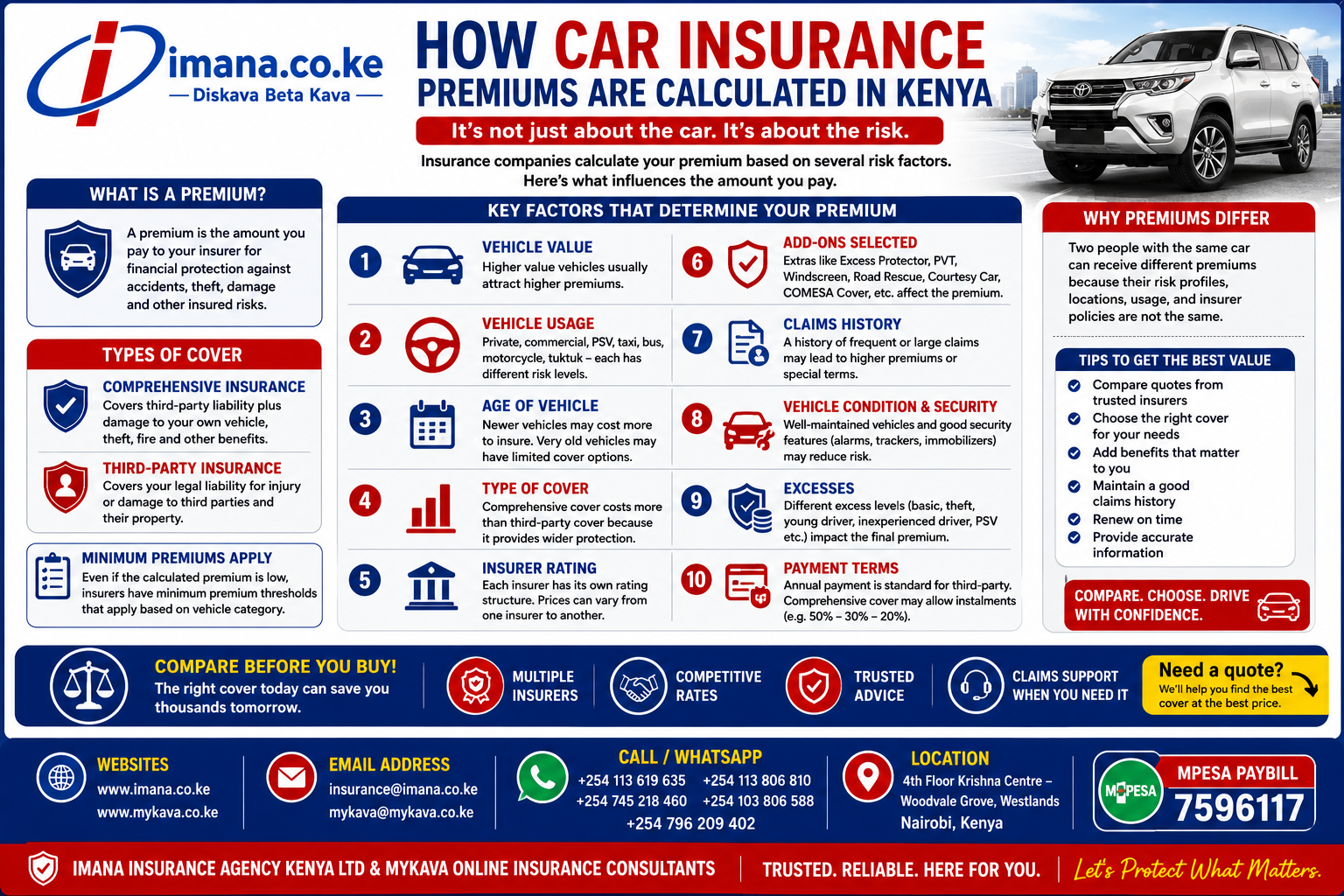
1. Vehicle Value
For comprehensive insurance, the value of the vehicle is one of the biggest factors.
The higher the vehicle value, the higher the possible claim amount. A vehicle valued at KSh 4,000,000 will generally cost more to insure than one valued at KSh 800,000 because the insurer’s risk is higher.
That is why insurers often request the current market value or a valuation report before issuing comprehensive cover.
2. Vehicle Usage
How the vehicle is used also affects the premium.
Common vehicle classes include:
- Private use
- Commercial use
- PSV taxi
- PSV matatu
- Bus
- Motorcycle private
- Motorcycle PSV
- Tuktuk commercial
- Tuktuk PSV
- School bus
- Commercial special type
A private car used for home and office movement is not priced the same as a PSV taxi carrying fare-paying passengers daily. The more exposure the vehicle has on the road, the higher the risk.
3. Type of Cover
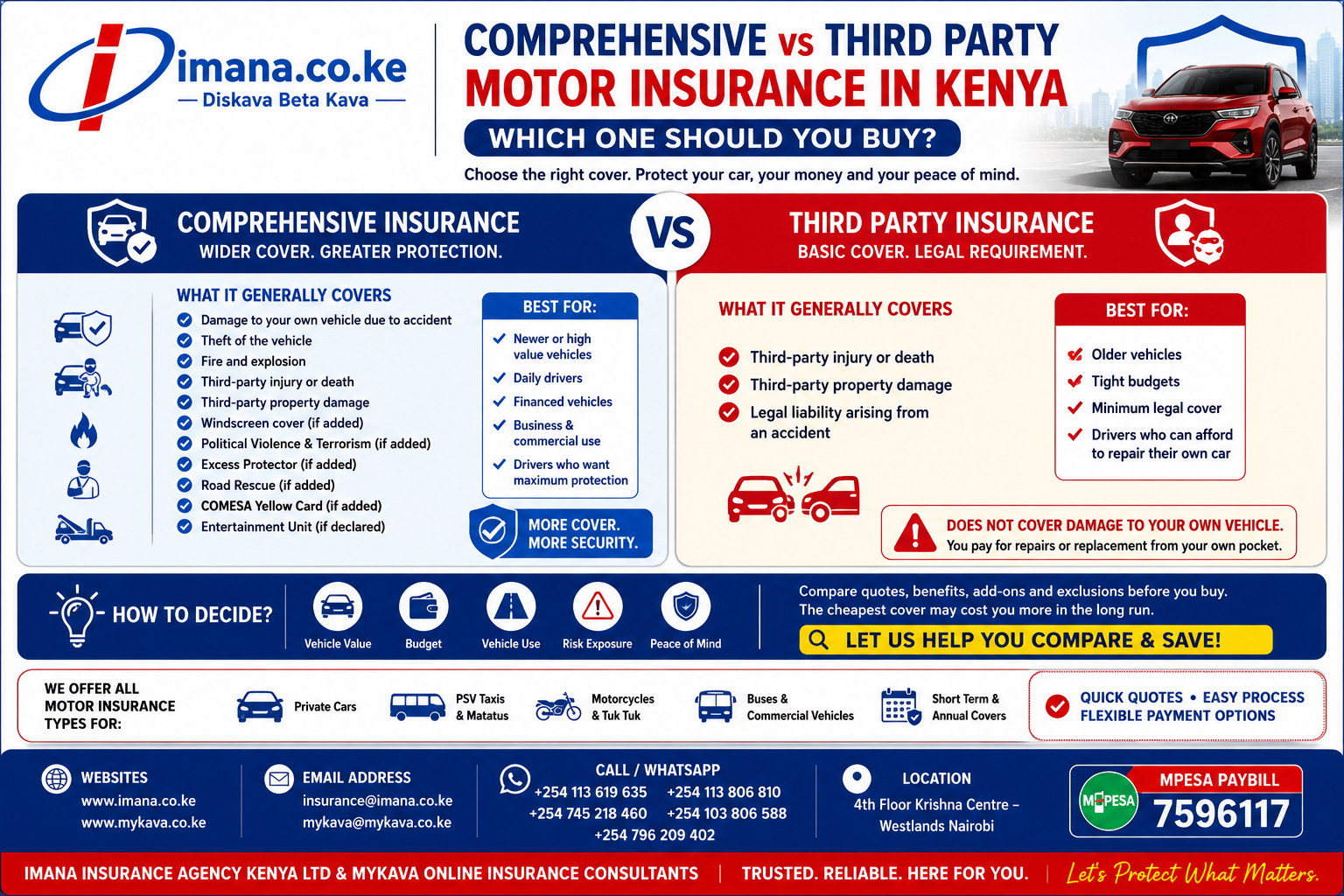
The premium also depends on whether you are buying:
- Third-party only insurance
- Comprehensive insurance
Third-party only cover is cheaper because it does not cover damage to your own vehicle. Comprehensive cover costs more because it offers wider protection.
4. Minimum Premiums
Some people calculate premiums by simply multiplying the vehicle value by a rate. But in real insurance pricing, minimum premiums matter.
For example, an insurer may charge a certain percentage of the car value, but also have a minimum annual premium. If your calculated premium is below the minimum, the minimum premium applies.
This is why a low-value car may still attract a premium that feels higher than expected.
5. Add-Ons Selected
Add-ons increase protection, but they also affect the final premium.
Common add-ons include:
- Excess Protector
- Political Violence and Terrorism
- Windscreen cover
- Entertainment unit cover
- Courtesy car
- Road rescue
- COMESA Yellow Card
- Passenger liability
- Driver personal accident
A quote that includes Excess Protector and PVT will not be the same as a quote without them.
So when comparing quotes, do not just ask, “Which one is cheaper?” Ask, “What exactly is included?”
6. Insurer Rating
Different insurance companies use different rating structures. One insurer may rate a private car at one percentage while another uses a different rate.
This is why comparison is powerful.
The same vehicle can receive different premiums from CIC, APA, Pioneer, Fidelity, SanlamAllianz, First Assurance, Geminia, Kenyan Alliance or other trusted insurers depending on their current rates and underwriting appetite.
7. Claims History
If a client or vehicle has a poor claims history, the insurer may consider the risk higher. In some cases, this may affect the premium, excess, acceptance or policy terms.
Good claims history can help when negotiating or comparing options.
8. Vehicle Age and Condition
Older vehicles may attract different terms because repairs, spare parts and depreciation can create underwriting concerns.
Some insurers may decline comprehensive cover for very old vehicles, while others may request a valuation report or apply special conditions.
9. Excesses
An excess is the amount the insured contributes when a claim occurs. Different insurers apply different excess structures.
Common excess types include:
- Basic excess
- Theft excess
- Young driver excess
- Inexperienced driver excess
- PSV-related excesses
- Own damage excess
A lower premium may come with higher excesses. Always check.
10. Payment Terms
Some comprehensive policies allow instalment payment. For example, a client may pay:
- 50% first instalment
- 30% second instalment
- 20% third instalment
Third-party only insurance is usually paid once annually.
Payment flexibility can make comprehensive insurance easier to manage, especially for businesses and fleet owners.
Why Comparing Quotes Matters
One insurer may offer a lower premium but fewer benefits. Another may cost slightly more but include better add-ons, stronger claims support or better terms.
A proper motor insurance comparison should look at:
- Premium
- Benefits
- Add-ons
- Excesses
- Limits
- Payment options
- Claims reputation
- Policy conditions
Insurance Wisdom
Car insurance premiums in Kenya are not just about the vehicle value. They are influenced by vehicle use, cover type, insurer rates, add-ons, excesses, claims history and policy terms.
Before buying, compare properly.
Need a motor insurance quote comparison?
Talk to Imana Insurance Agency Kenya Ltd or MyKava Online Insurance Consultants.
Call/WhatsApp: +254 796 209 402
Websites: www.imana.co.ke | www.mykava.co.ke
Office: 4th Floor, Krishna Centre, Woodvale Grove, Westlands, Nairobi